orthodox
a new series from my time in Georgia
In early March, I bought a last-minute, one-way ticket to Tbilisi…
In early March, I bought a last-minute, one-way ticket to Tbilisi. Although I’d been once before, in 2018, that brief visit mostly served as a scouting mission. This time, after spending all winter traveling across three continents and six countries, I wanted to sit still for a while—to read, immerse myself in Georgian culture, and, of course, photograph.
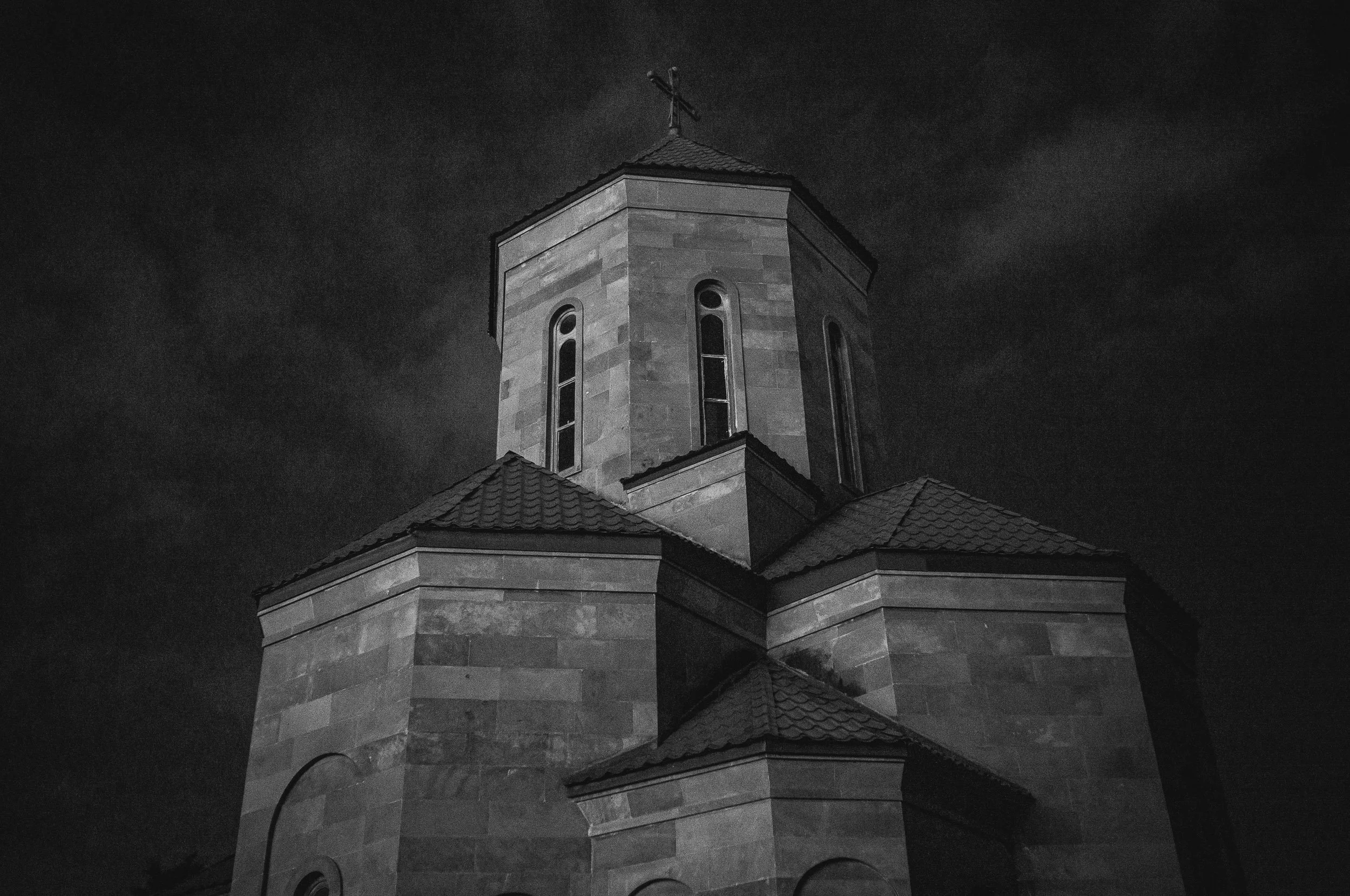
While en route, I booked an aging attic apartment in Old Tbilisi. Upon arrival, I discovered that its jumble of dormers, awkward ceiling angles, and slanting floors sometimes made me feel as though I were back at sea aboard the Fin & Tonic. But it also had a beautiful fireplace, sweeping views of the city, and sat just a few blocks from the iconic sixth-century Sioni Cathedral. In other words, it was perfect.
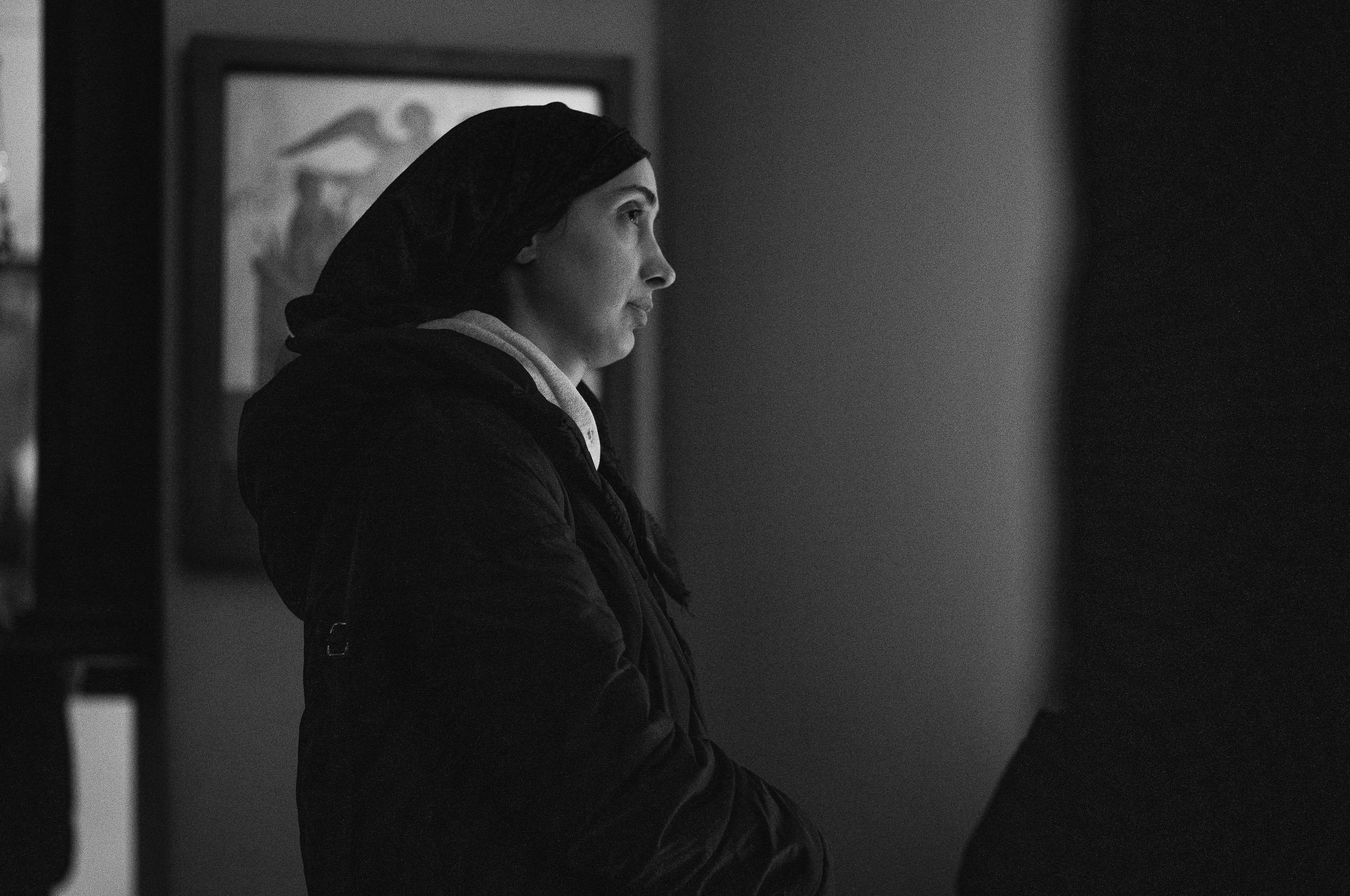
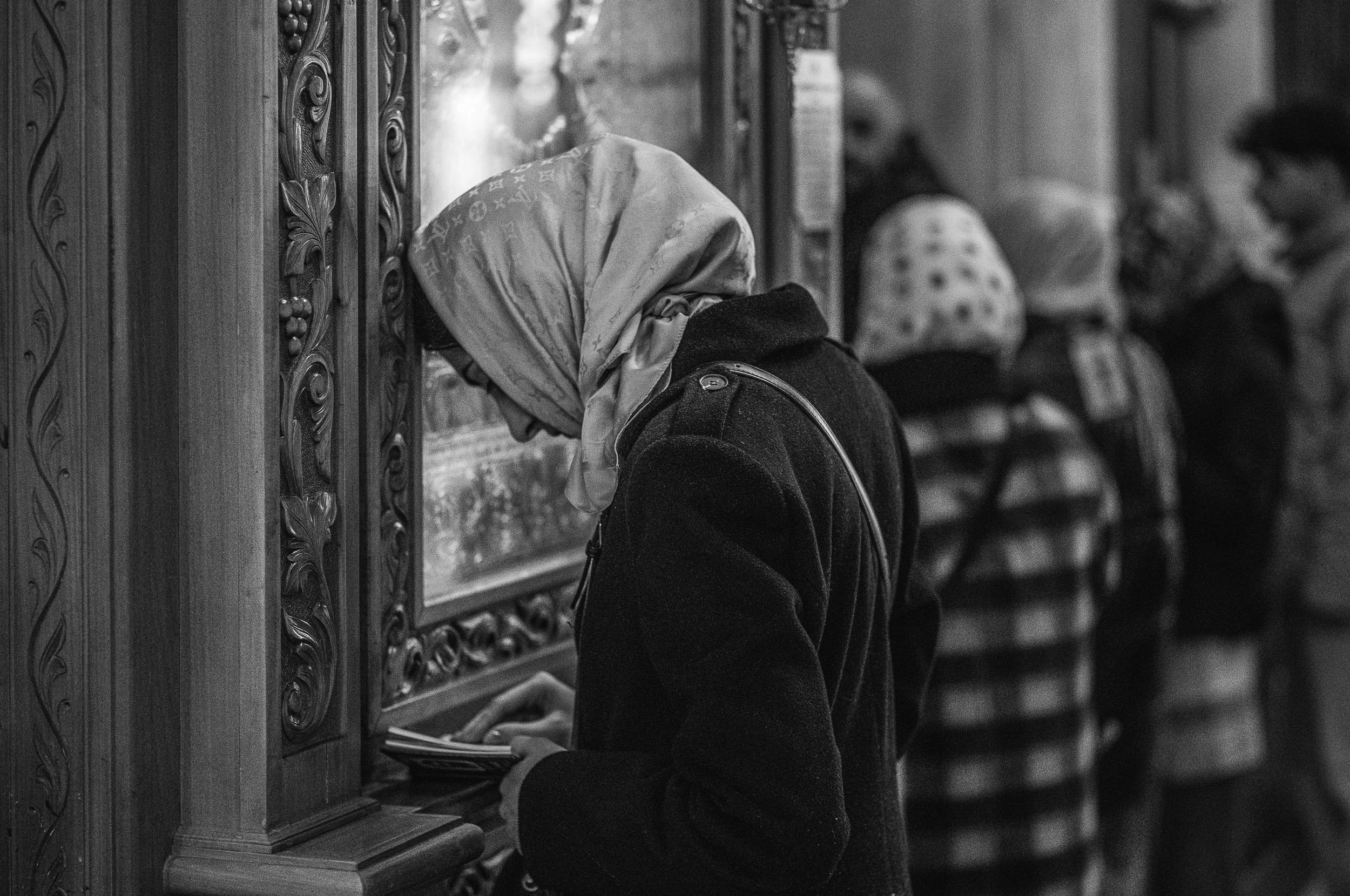
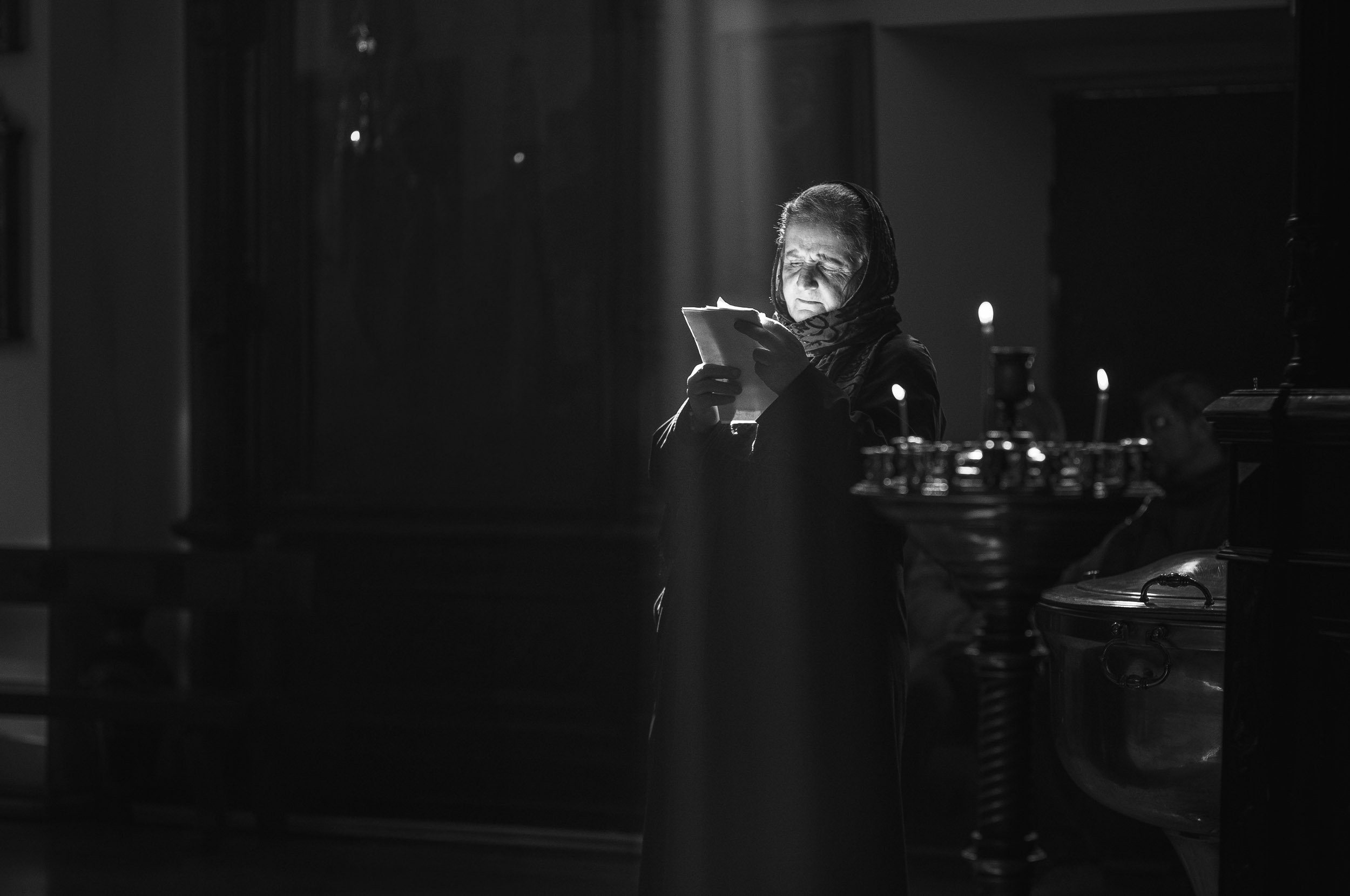
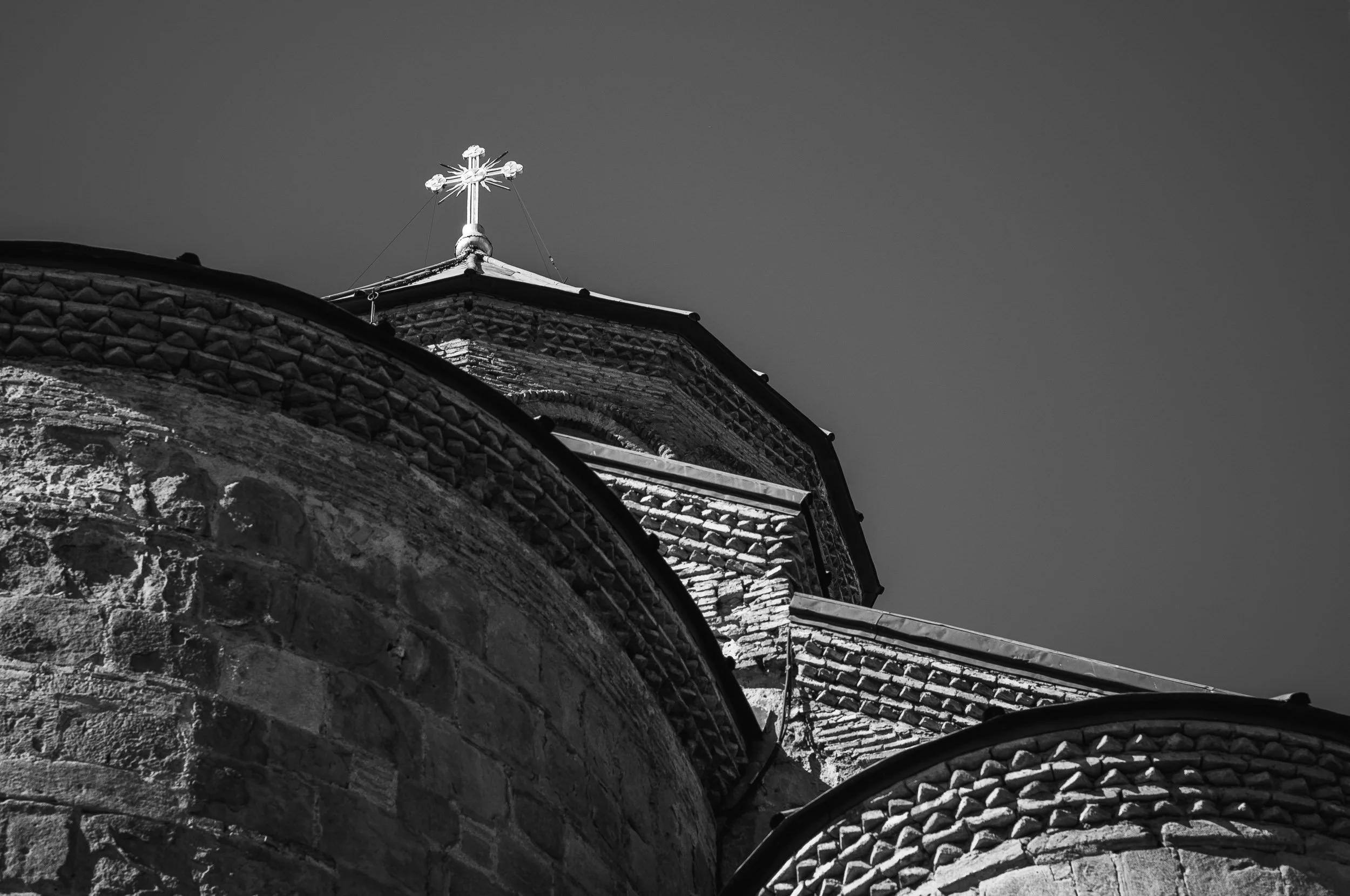
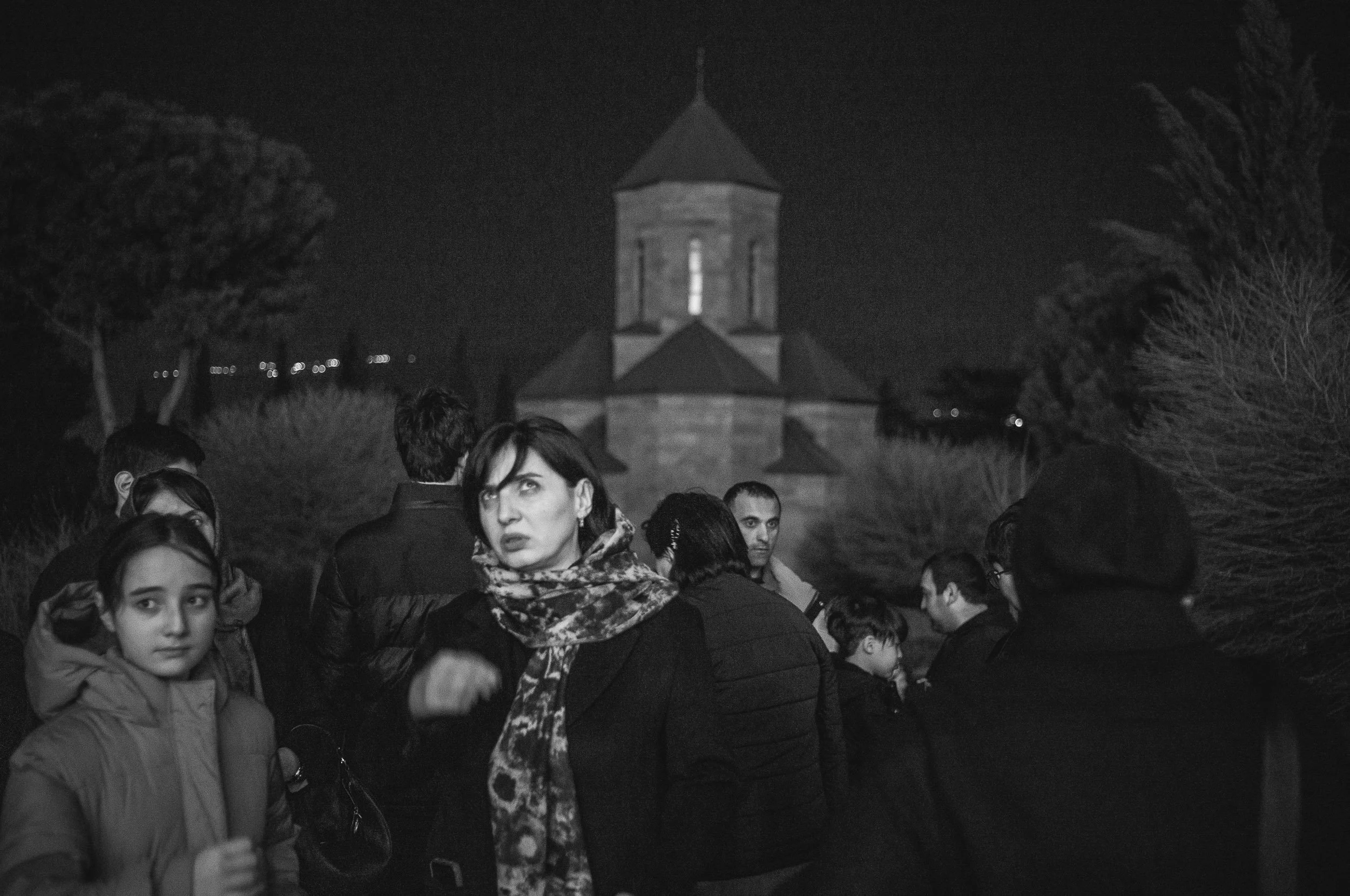
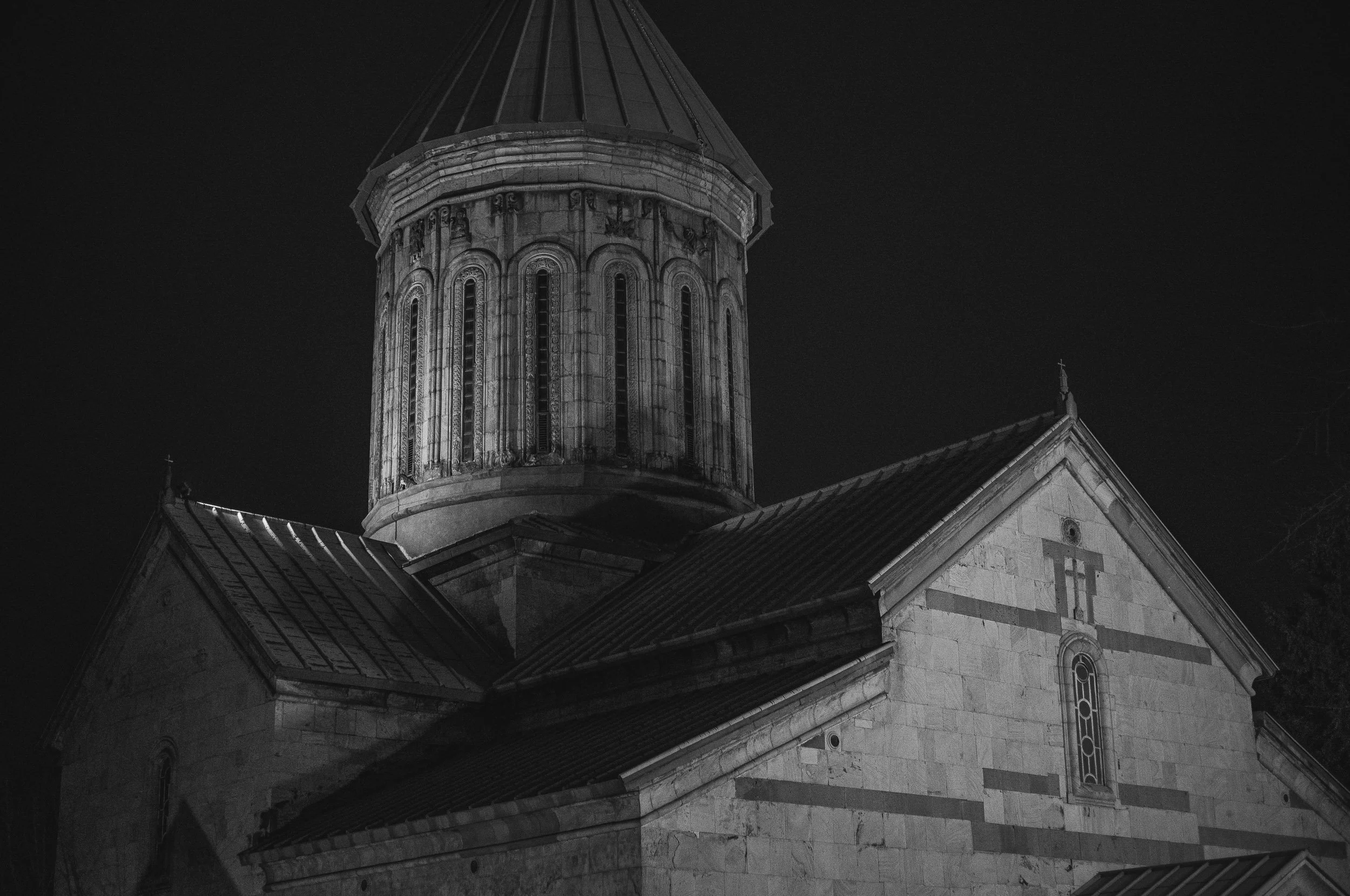
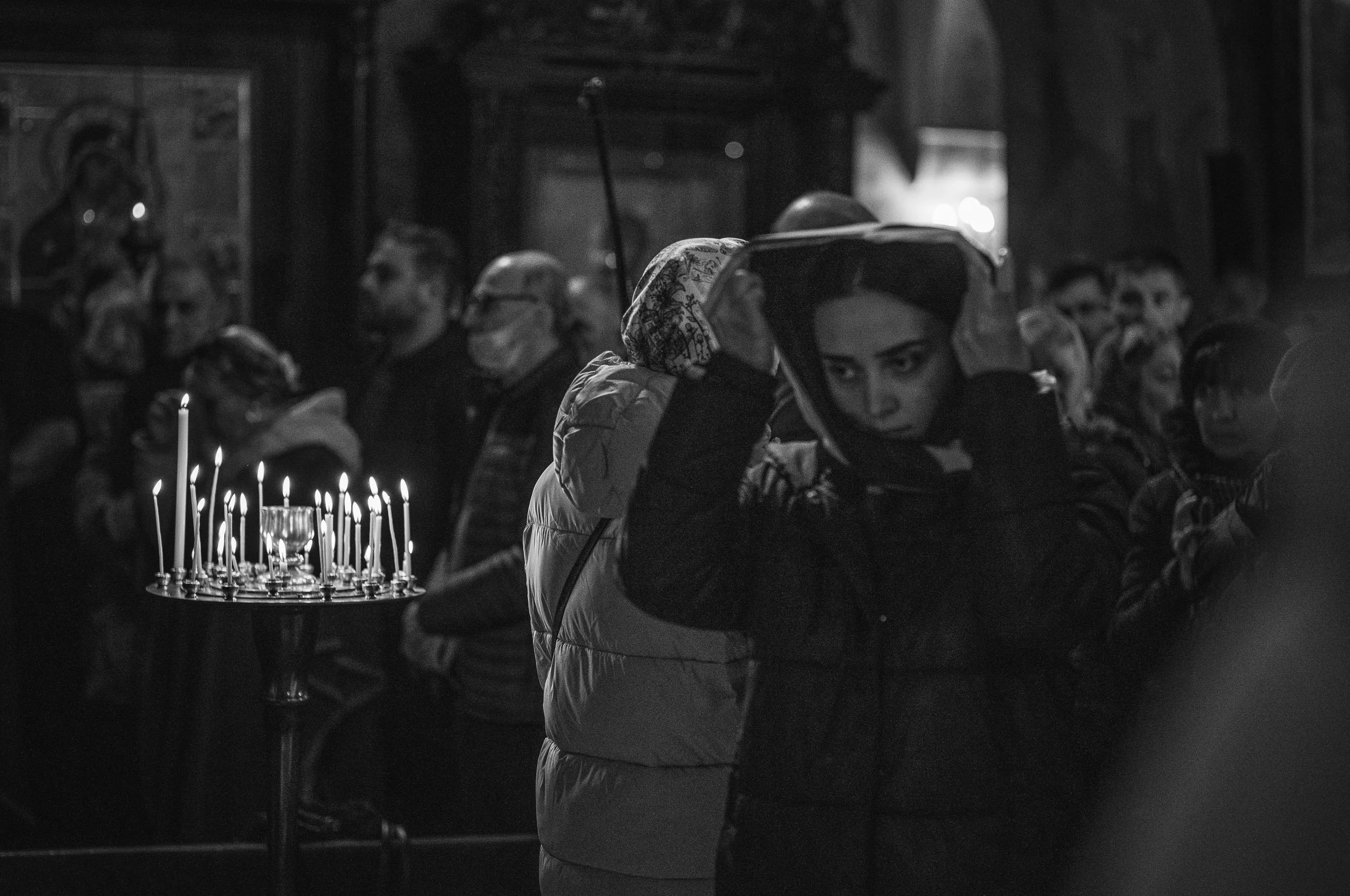
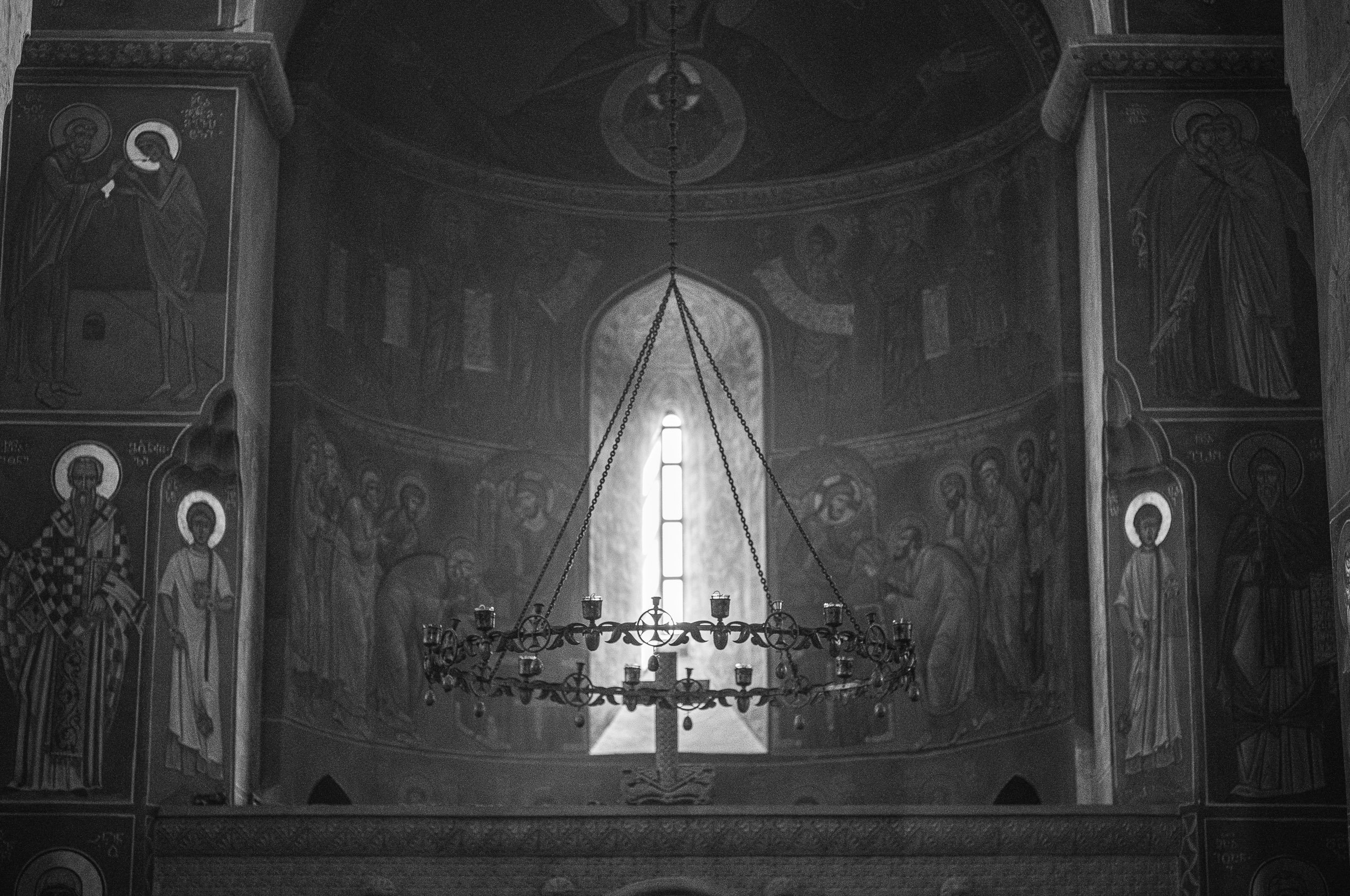
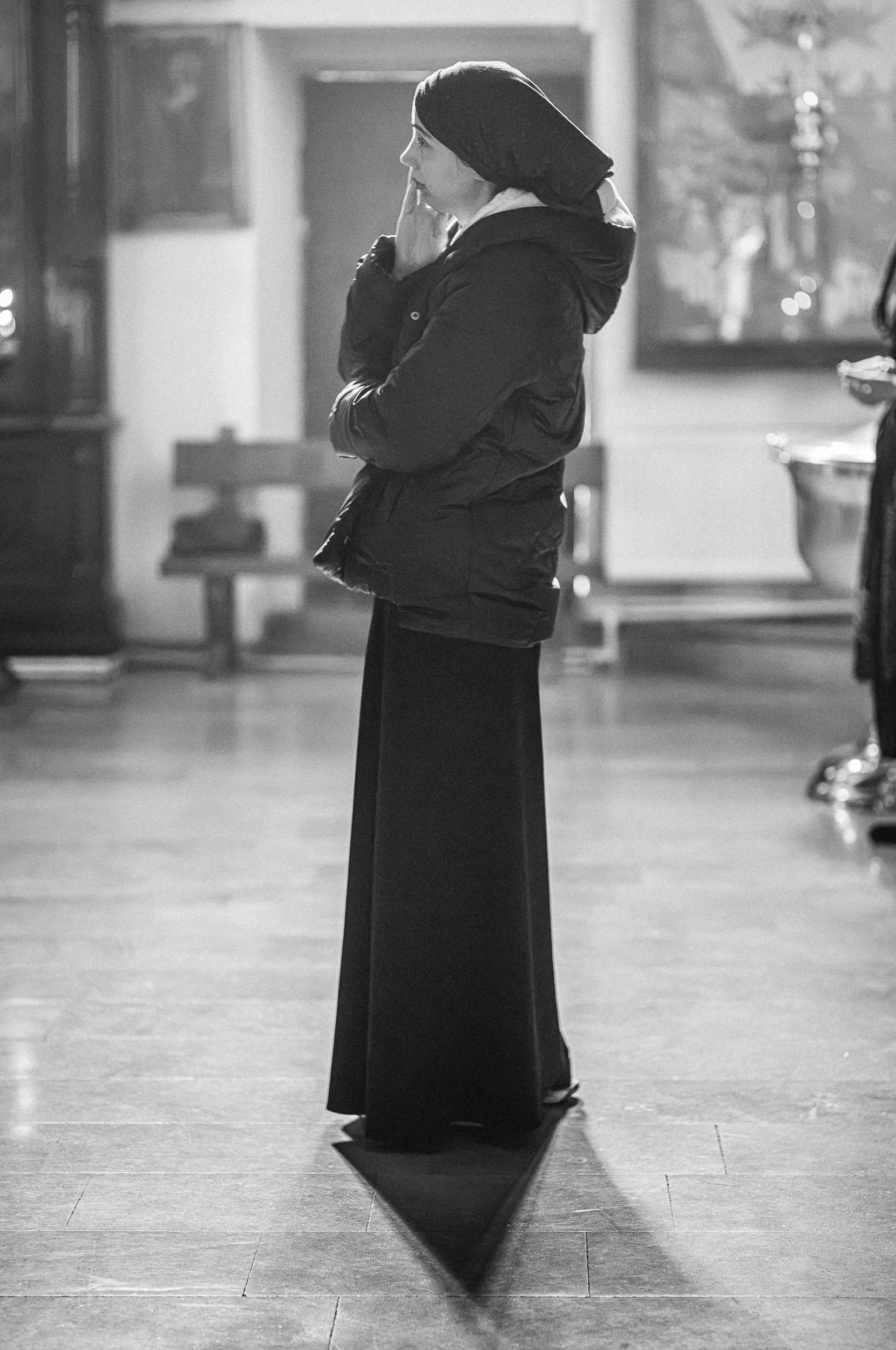
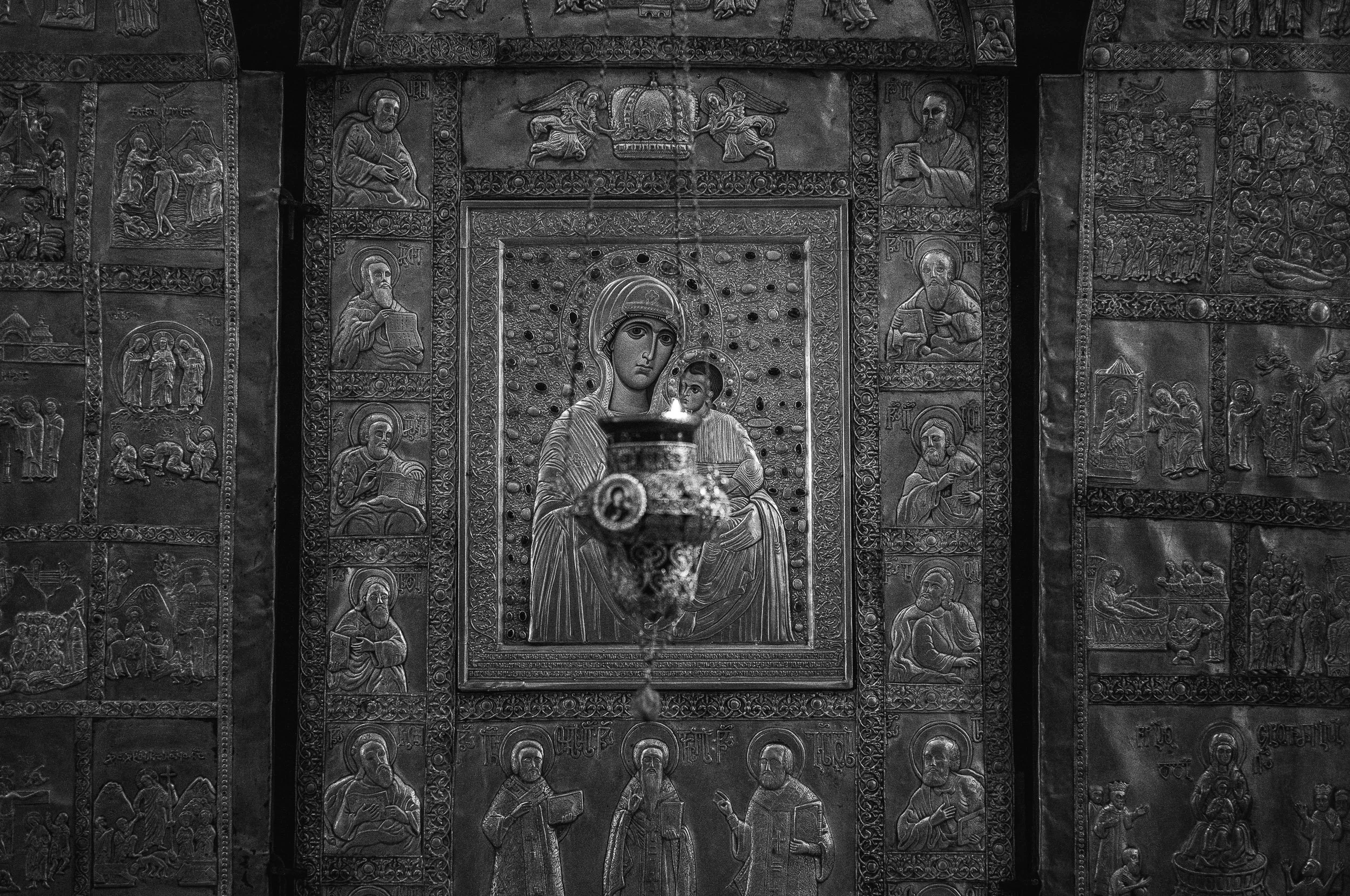
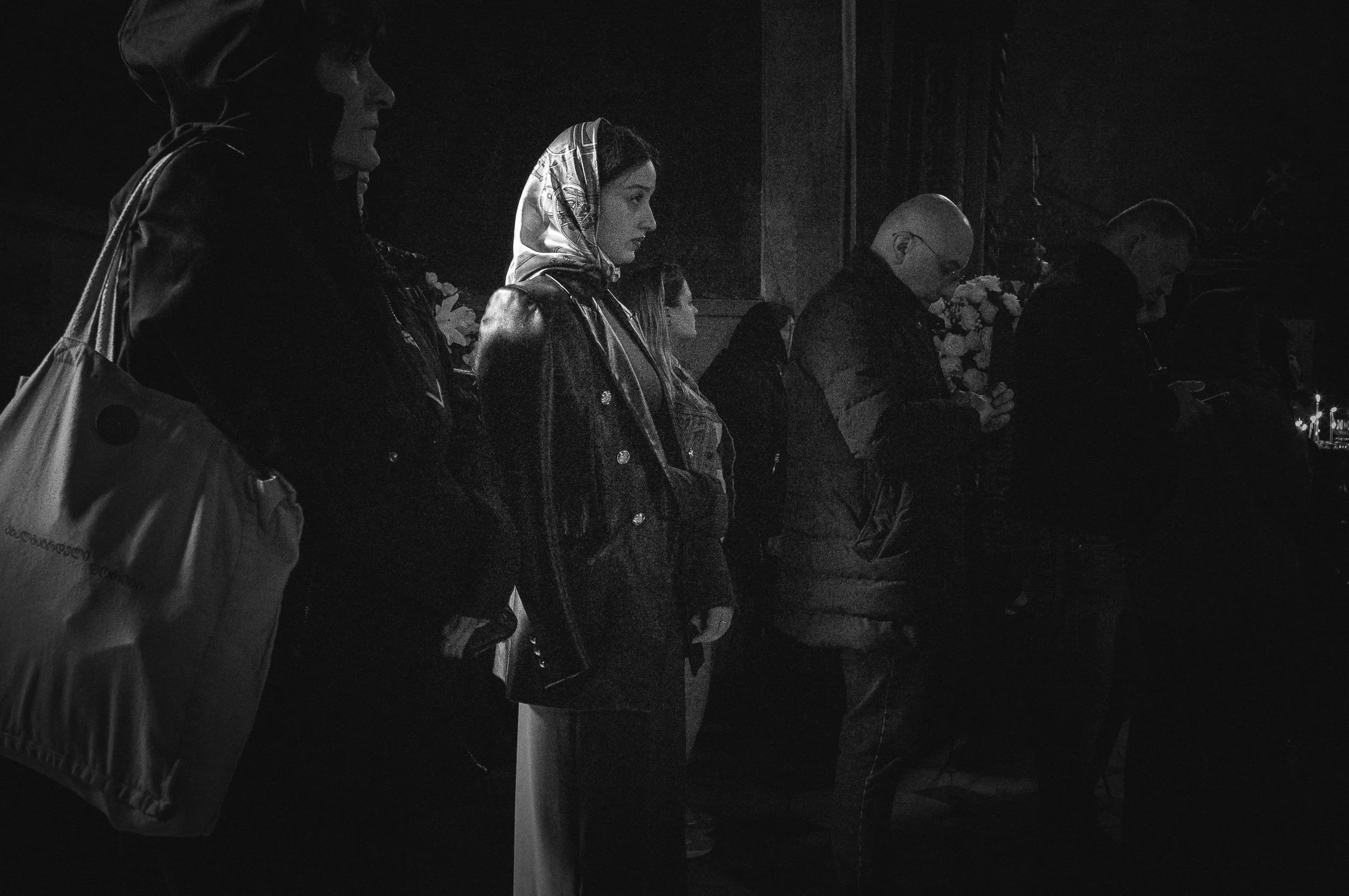
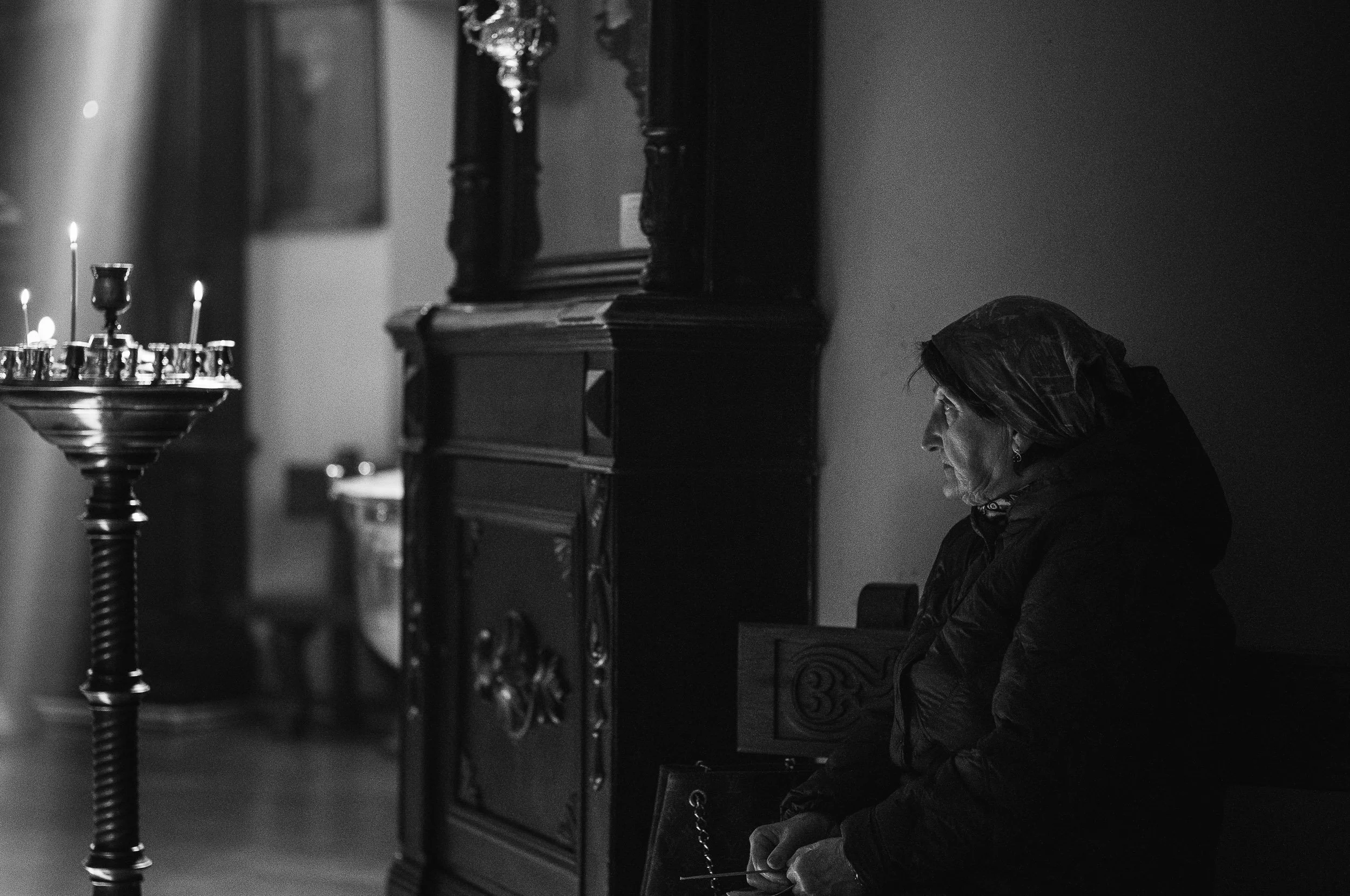
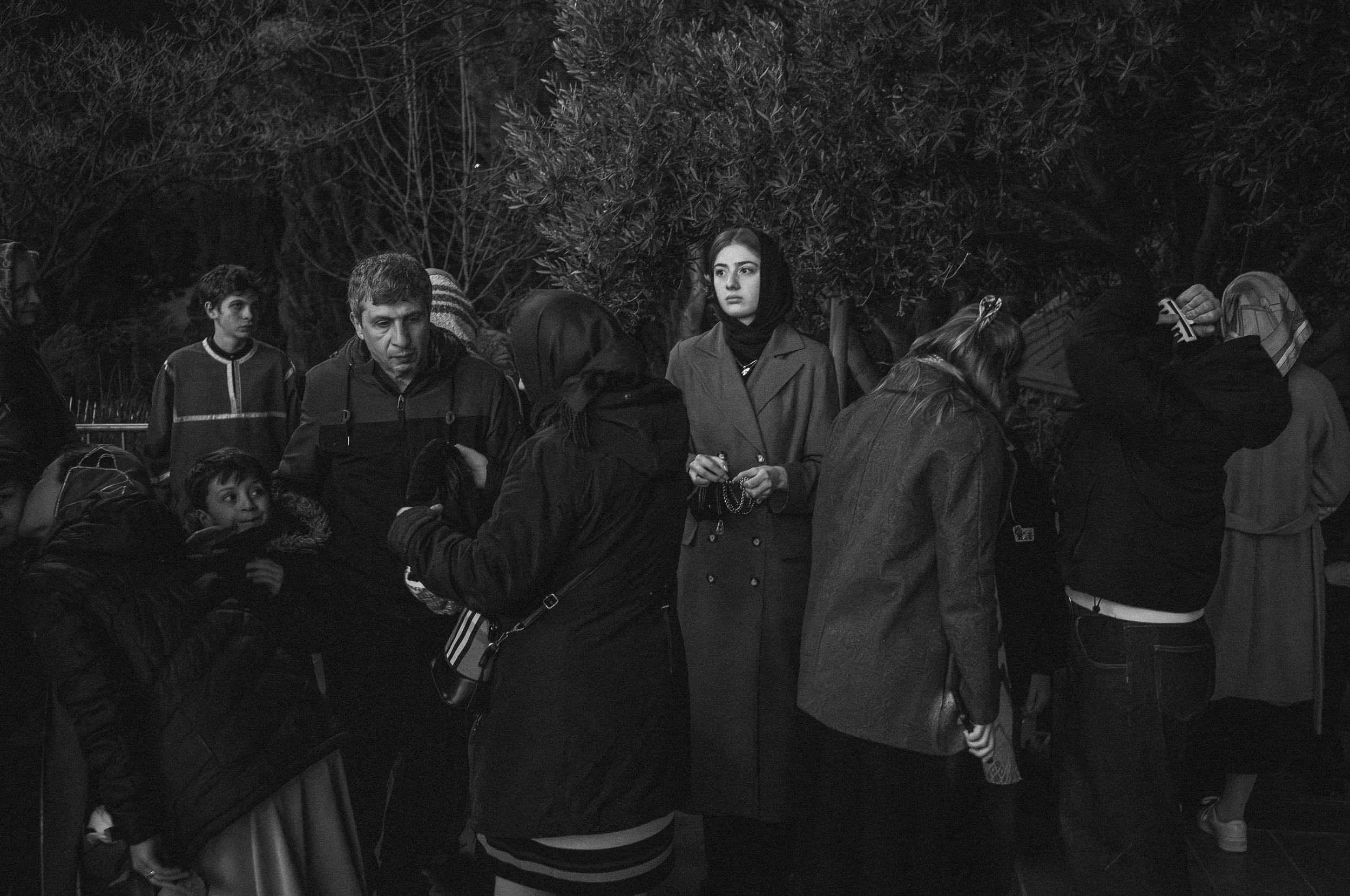
As expected, I spent my first month wandering the city’s endless maze of streets. Less expected was how I found myself returning almost daily to its countless ancient churches—more for the people inside and the quiet rituals of Georgian Orthodox worship than for their architecture.
II
chip on my shoulder
my personal experience with religion
Anyone who knows me well is aware that I had a strong religious upbringing within Mormonism. Both sides of my family trace their ancestry back to the early days of the LDS Church. I was raised in a predominantly LDS community, served an LDS mission, earned a degree from BYU, was married in the Salt Lake Temple (albeit briefly), and later served as an ordinance worker there. However, after struggling with my faith for more than a decade, I eventually left the church in my late twenties and, almost simultaneously, became an atheist.
While I’m happy to discuss the details of that journey in private, they’re not the focus here. What matters for this story is that it left me deeply skeptical of religion, both in principle and in practice. I sometimes joke that I’m allergic to it.
Consequently, while I have often photographed churches and cathedrals for their architecture (for example, Gaudí’s Sagrada Familia in Barcelona), I haven’t had much interest in the religious observances themselves.
All this to say, this is why it was so unexpected that, while in Tbilisi, I became drawn to the very thing I had spent so much of my life viewing with skepticism: religious devotion itself.
I became drawn to the very thing I had spent so much of my life viewing with skepticism
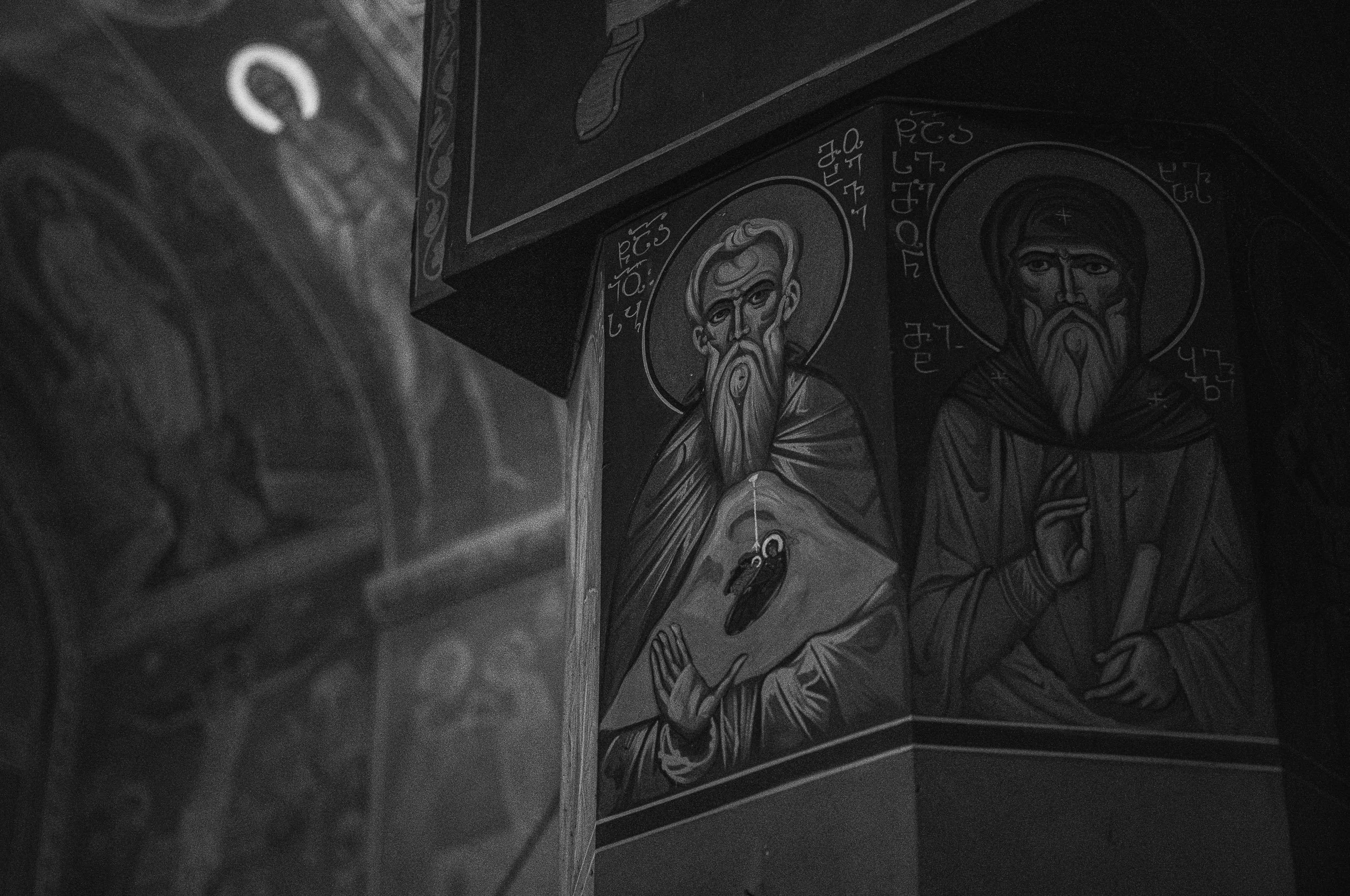
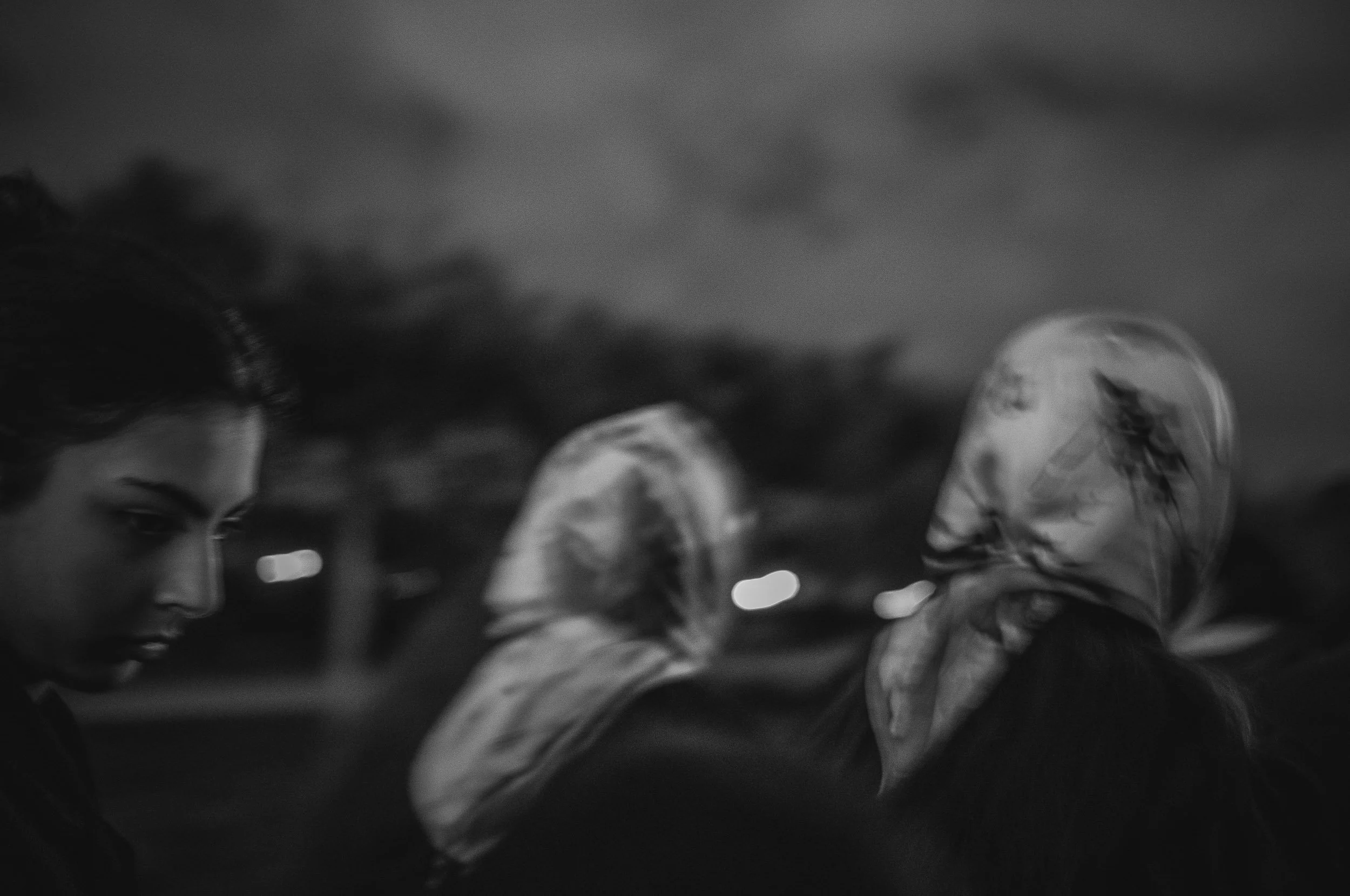
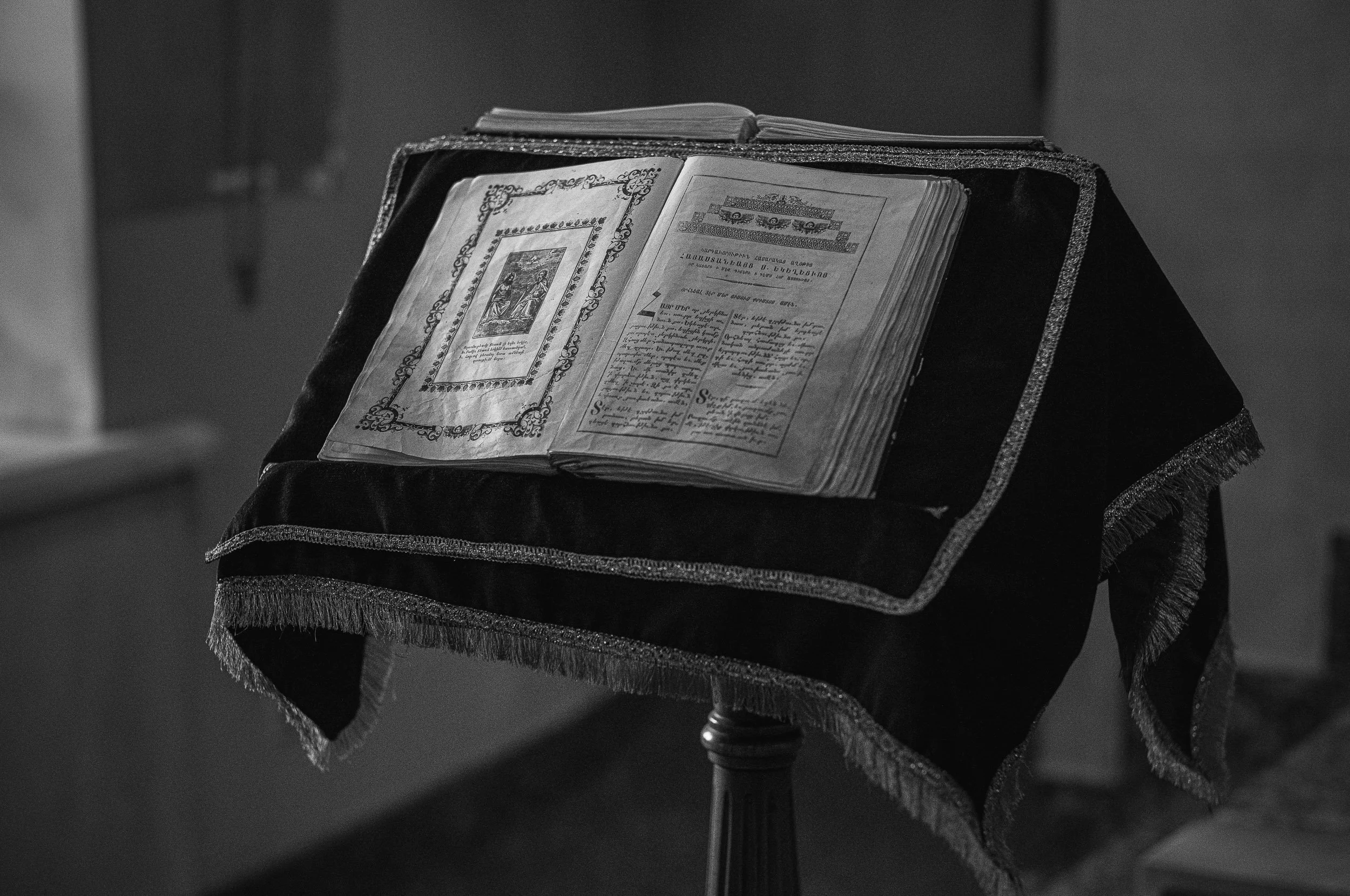
III
You think you are meat?
a conversation with a priest at Metekhi Church
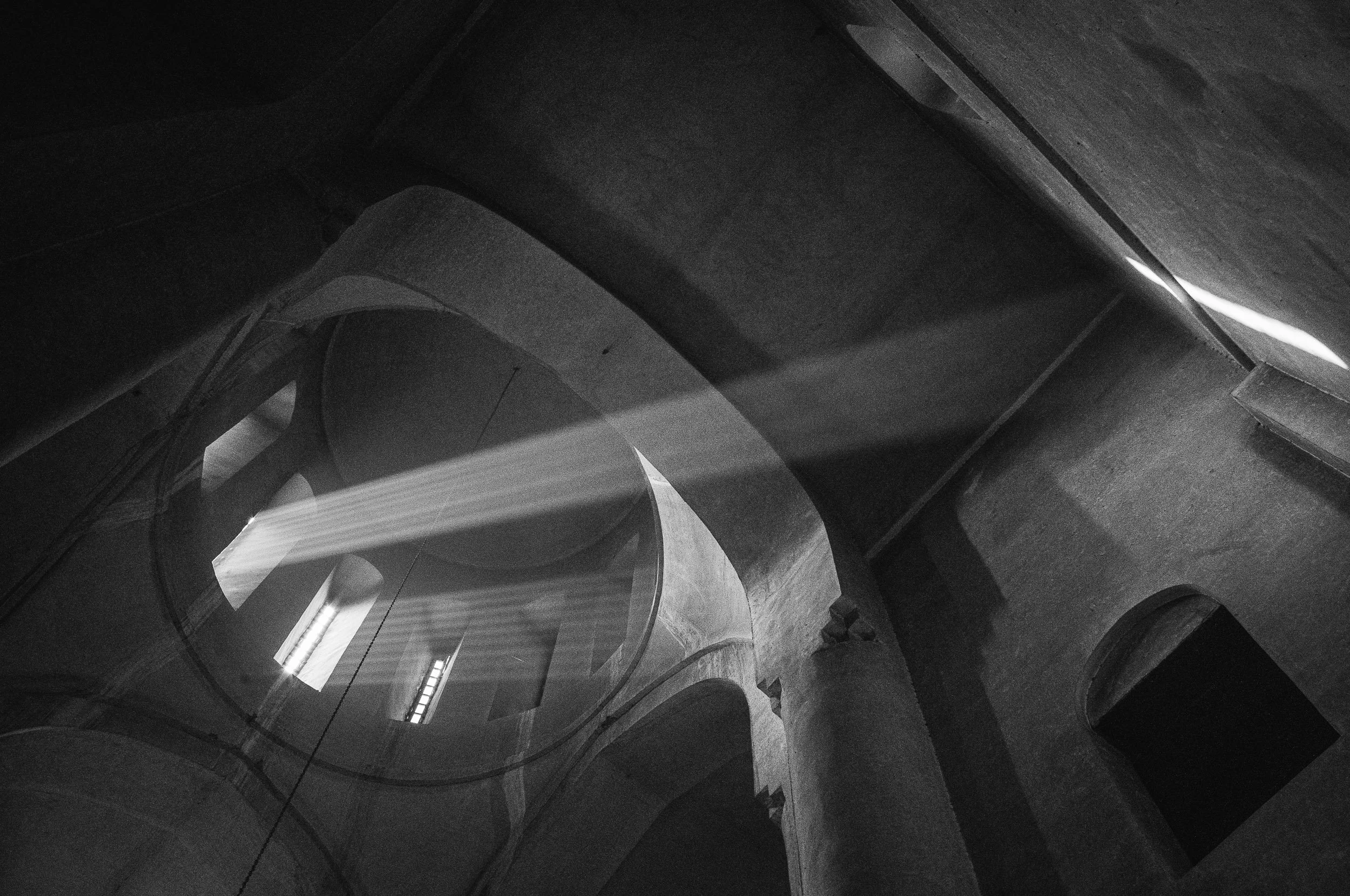
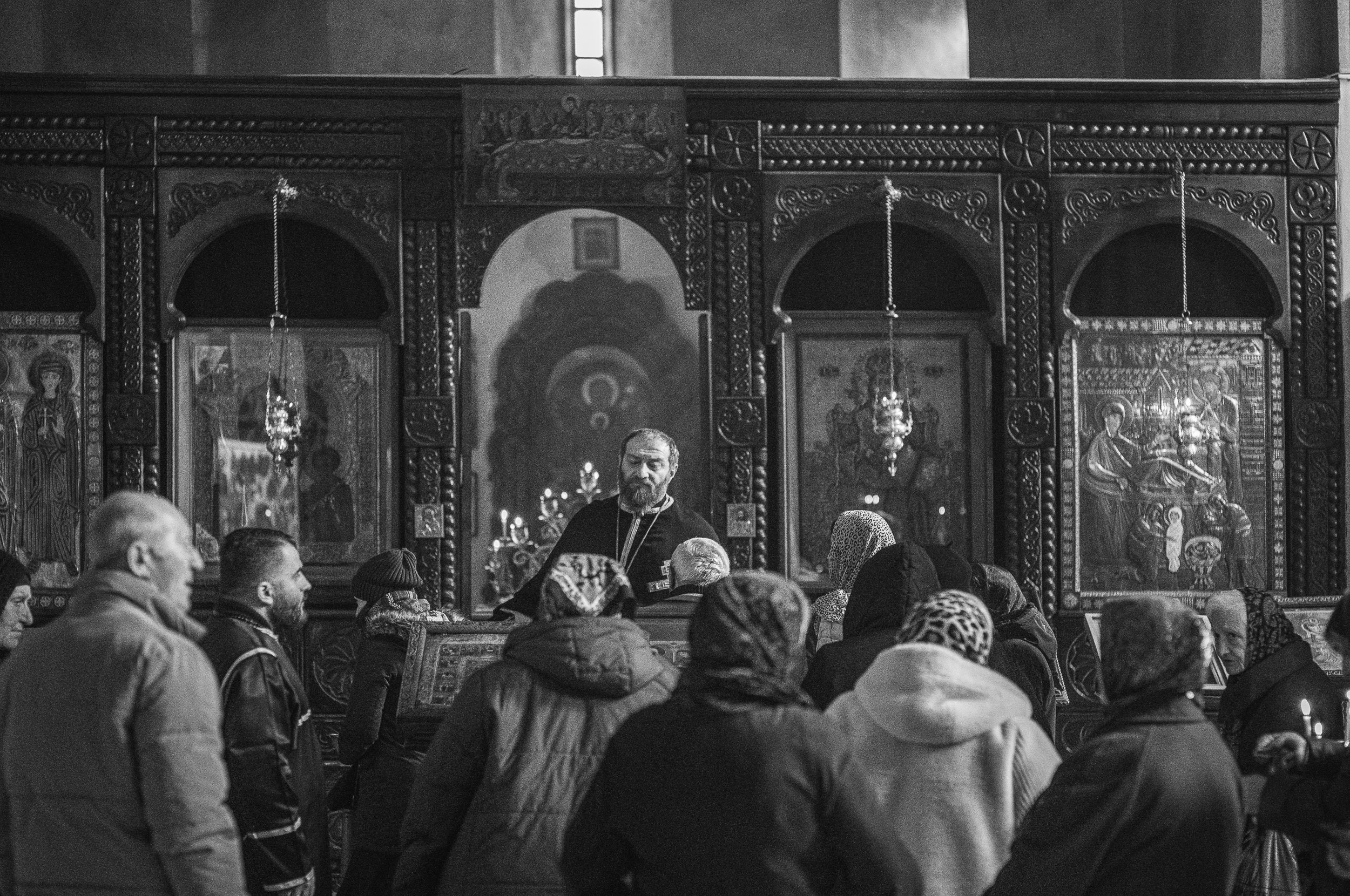
Early on, I visited the Metekhi Church, perched atop cliffs overlooking the Kura River. I’d been before, but this day was exceptional. Shafts of light streamed through the dome's tholobate apertures while the Divine Liturgy proceeded around me, the church’s nave resonating with the haunting a cappella harmonies of the liturgical polyphony. (Irreverent aside: the production value was off the charts; Ron Fricke never had it so good!)
I felt a tap on my shoulder and turned to see one of the clergy. I was immediately ashamed, expecting a reprimand for photographing so brazenly in a sacred space.
Instead, in broken English, with an earnest expression framed by a thick beard, he asked, “You are…believer?”
I shook my head, "Not anymore. Sorry."
Unfazed, he asked where I was from.
‘Alaska,’ I replied—a convenient dodge I’ve adopted lately to avoid answering for my country’s actions (especially given the developing war in nearby Iran).
His third question caught me off guard. “You think you are meat?”
My mind raced to make sense of the seeming non sequitur. For Alaskan bears? Then I realized that, like Spanish, Georgian might use the same word for meat and flesh. He was confronting me with an ancient question: the very one, in fact, that I'd wrestled with so many years ago.
All I recall of my answer was that it felt insufficient…to both of us. The language barrier made further discussion impossible. Sensing the same frustration, he pulled out his smartphone and began entering Kartvelian characters into Google Translate with an unsteady finger. The translation that slowly emerged was rough, but I got the gist: he had grown up in Soviet Russia as an atheist, suffered under Brezhnev; later came to Georgia and found God. He concluded by suggesting I might also benefit from finding God.
I smiled and realized tears had come to both of our eyes. He told me his name, asked mine, embraced me warmly, then quietly returned to his parishioners.
All I recall of my answer was that it felt insufficient…to both of us.
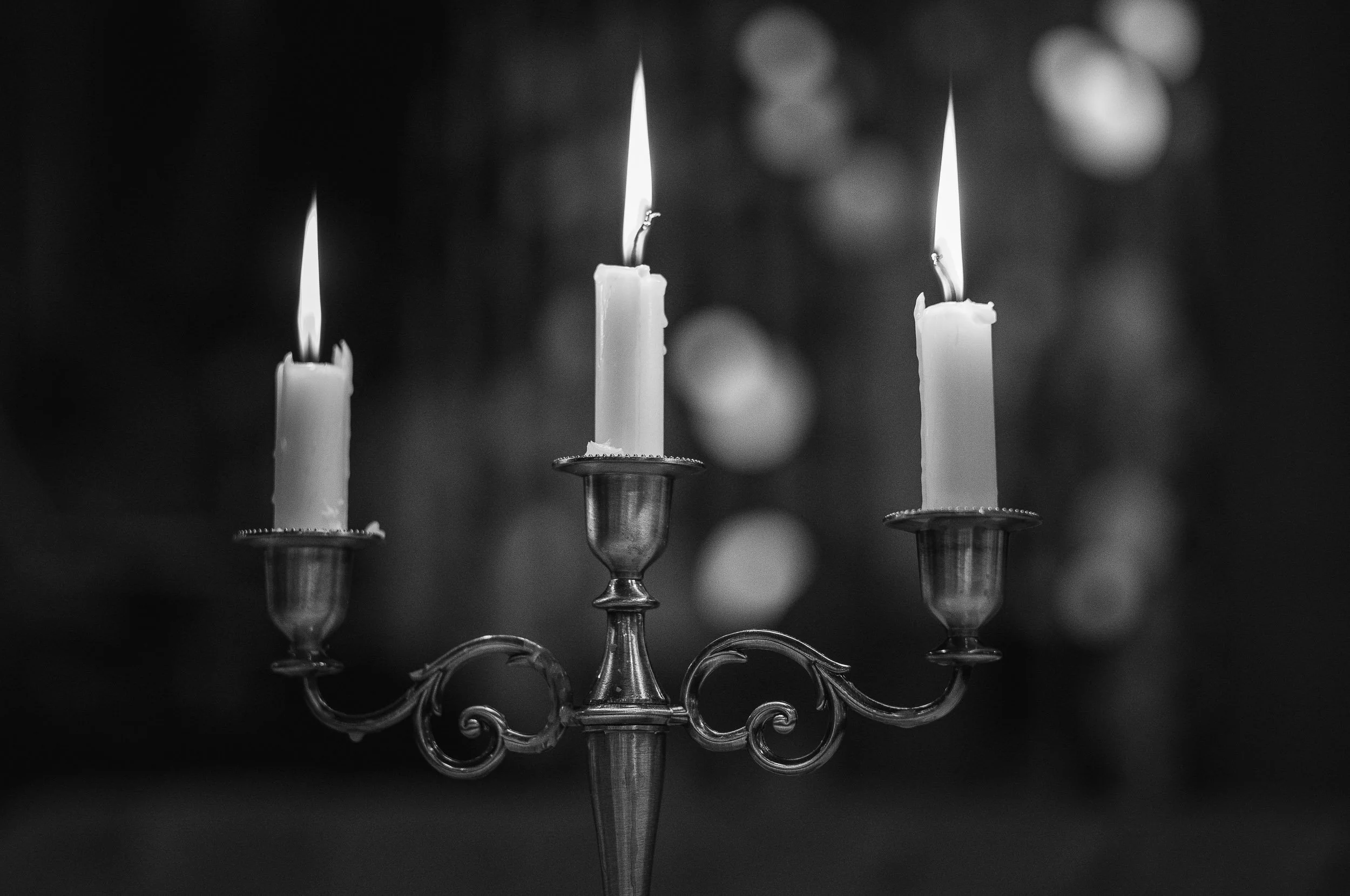
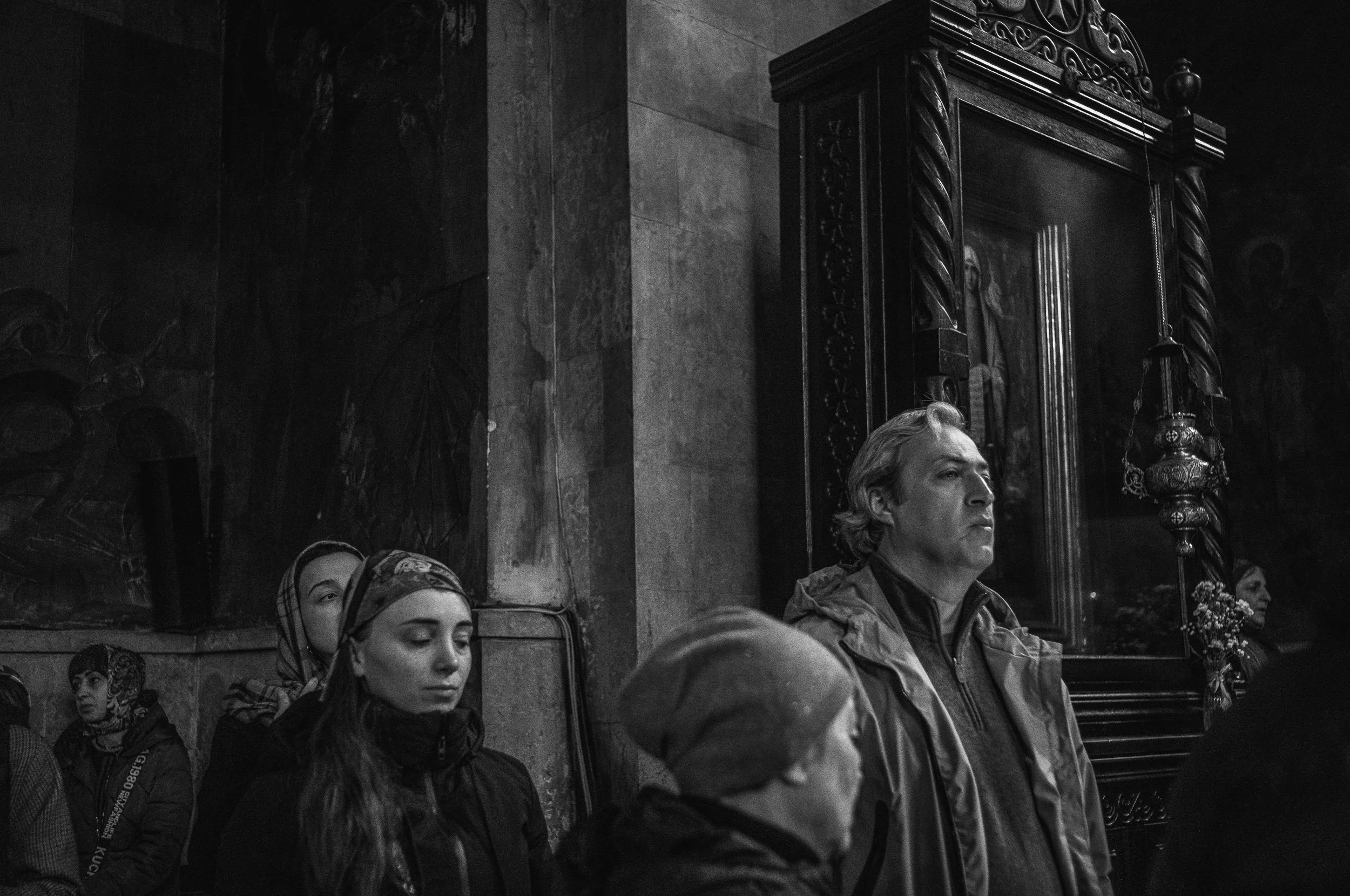
IV
hesitation meditation
a coward’s guide to photographing strangers
After my interaction with the priest at Metekhi, I found myself spending more and more time visiting the various churches. Sometimes only for a few minutes. Other times for hours. Observing. Absorbing. Thinking.
I should be clear: I don’t think I was finding God. I’m still a resolute atheist. Rather, it was as if my eyes had been opened to a form of beauty I’d long overlooked…and desperately wanted to capture. The trouble was, the photographs I envisioned demanded a way of working that had never come naturally to me.
After graduating from BYU, I assisted an exceptionally talented photographer who had zero qualms about approaching people he wanted to photograph—sometimes brazenly directing them as though they were paid talent! Watching from the sidelines gave me a full dose of second-hand awkwardness; but whether through his natural charisma or simply the power of suggestion, I was shocked to see that most people cheerfully went along with it (and the results were often nothing short of incredible). To this day I haven’t decided whether his boldness left me more appalled…or more jealous.
I’ve simply never possessed that kind of social ease. Unless I’m working under the aegis of a commercial commission or have a magazine credential hanging from my neck, it usually takes everything I have to approach a stranger and ask to make a portrait. More often than not, the moment passes, leaving me empty-handed and frustrated. That or I retreat to my comfort zone: shooting from a distance.
Most frustrating of all, that hesitation has inexplicably intensified in recent years, and Georgia was no exception. While I’m happy with the photographs I made for this series, I’m haunted by the thousands of moments I didn’t, or couldn’t, capture.
However, somewhere in the unhurried, unstructured, unstressed rhythm of my days in Tbilisi—wandering streets, ‘going to church’, and reading by the fire—I encountered the space to examine that hesitation more closely.
There was a lot more to this than just being shy.
I’m haunted by the thousands of moments I didn’t, or couldn’t, capture.
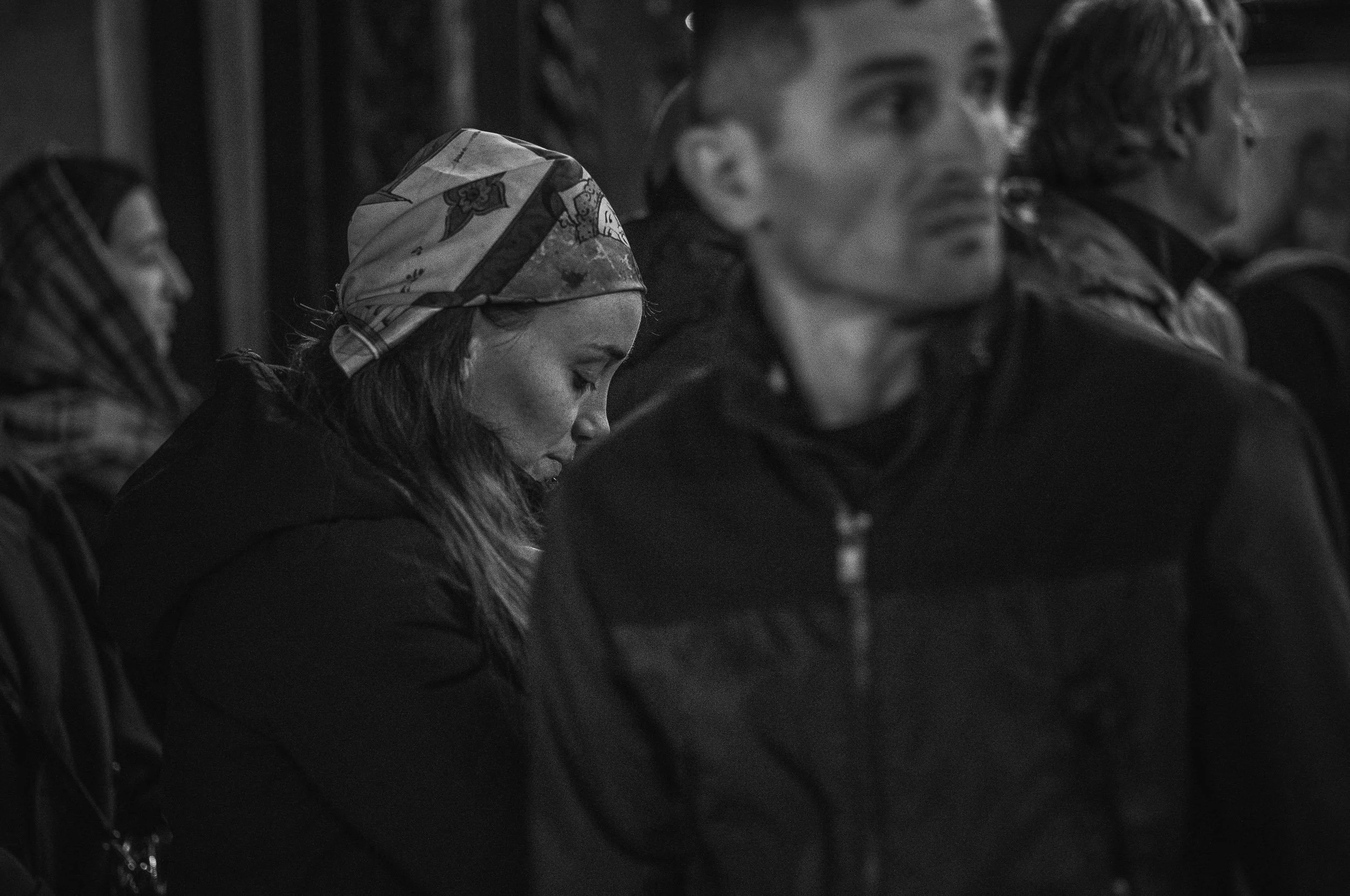
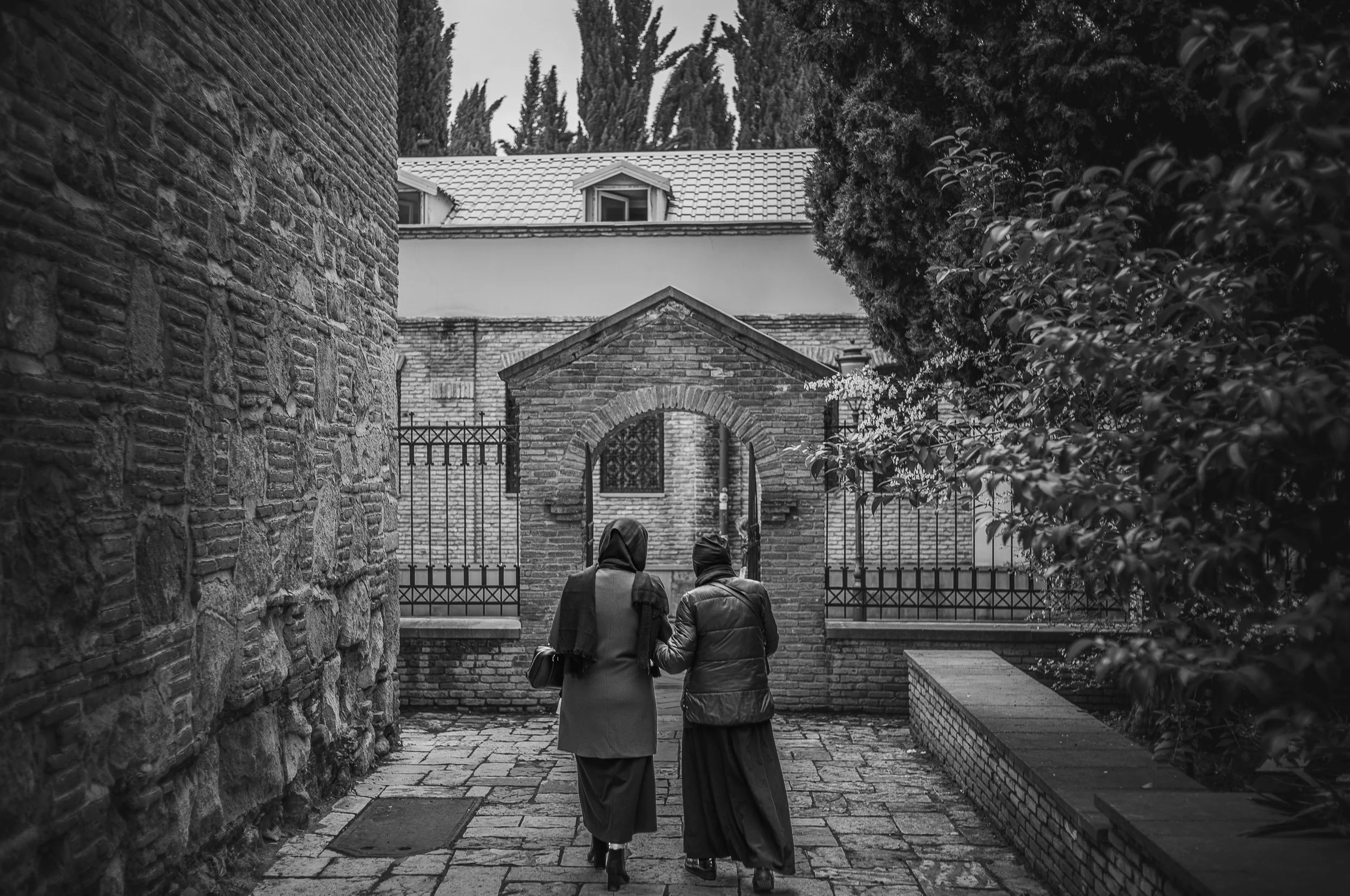
V
The photo-Literate World
public photography in the age of Instagram & tik-tok
A year after I first picked up my dad’s Nikon at age 14, my family moved to Guatemala. While the natural world is what initially drew me to photography, I suddenly found myself awash in a culturally (and chromatically) vibrant environment. It was there that I first became interested in photographing people, though it didn’t come easily.
Even so, until recently, I rarely encountered pushback, or questions like ’What are these photos for?’ or ‘Where will these end up?’ Usually, I didn’t even know, nor would I have thought they needed much justification. I believed capturing the world was photography’s implicit mandate. You didn’t need an assignment from National Geographic, holding a camera was reason enough.
Justified or not, that mandate has become harder to sustain in the age of smartphones and social media.
The shift is global, but it’s especially striking in Guatemalan villages that had little pre-existing communications infrastructure. There, mobile technology has leapfrogged a half-century of incremental development—landlines and internet service providers—and become many people’s first significant connection to the wider world. However, more interesting to me than the communications revolution itself is how clearly it has exposed the ethical blind spots in photography's social conventions.
Simply put, the world has become far more photo-literate.
Although I’d sensed this change in recent years, in Georgia I began to reckon with it more deeply. Each time I pointed my camera toward someone, I could no longer ignore the near-certainty that they, too, understood what a photograph could become: far-reaching, permanent, and beyond either of our control.
The upshot is that while photographing a bustling Guatemalan market in 1996 may have had innocent, aspiring-NatGeo-photographer vibes, now it has the social grace of brandishing a camera at Costco. Was photographing worshippers in a Georgian church really any different from doing so during an LDS sacrament meeting back in Idaho?
Each time I pointed my camera toward someone, I could no longer ignore the near-certainty that they, too, understood what a photograph could become: far-reaching, permanent, and beyond either of our control.
VI
on exploitation
one helluva time to revisit Susan Sontag
At an art gallery in Tbilisi, I found the gallerist reading a book I’d first encountered in college: Susan Sontag’s 1977 essay collection, On Photography. I remembered her insightful—and at times scathing—ruminations on the medium, and decided a reread was long overdue. Plus, I needed some genre variety to balance out The Aeneid and a calculus textbook.
I soon came across this bombshell passage, eerily relevant to what was on my mind:
There is something predatory in the act of taking a picture. To photograph people is to violate them, by seeing them as they never see themselves, by having knowledge of them they can never have; it turns people into objects that can be symbolically possessed.
Sontag's observations have acquired uncanny relevance in the age of smartphones and social media. Yet those technologies didn't create photography’s ethical dilemmas ex nihilo. Instead, by democratizing the medium so that nearly everyone now alternates between the roles of photographer and subject, they have exposed those dilemmas…and amplified them.
Elsewhere, Sontag broadens her critique:
The camera makes everyone a tourist in other people’s reality, and eventually in one’s own.
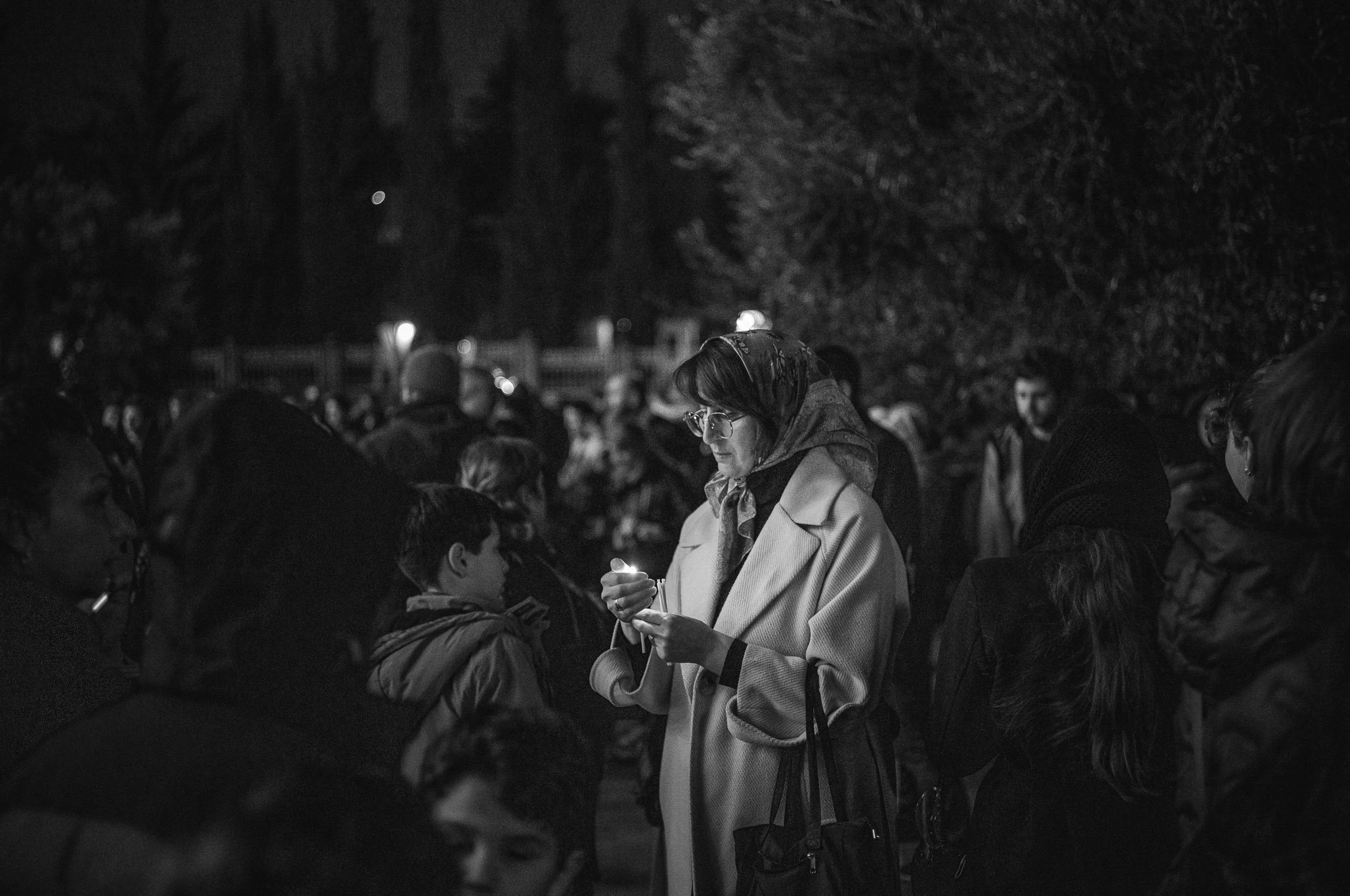
In Georgia, I was an outsider trying to photograph the intimacy of religious devotion without intruding. But I was up against something akin to a law of nature: photography is unavoidably exploitative. Intentions and context notwithstanding, the image still becomes mine in a way the moment never was—mine to present and interpret—while its subject may have no say at all.
That leaves me in an uncomfortable position, as this series is implicated as well. I’m inviting viewers to admire photographs drawn from others’ moments of worship, grief, and vulnerability. Perhaps these images capture something worth preserving and sharing. Then again, perhaps ‘capture’ is precisely the right word, as it betrays the dilemma itself: I was taking something that wasn't mine.
In a way, ORTHODOX is a record of that tension.
I was up against something akin to a law of nature: photography is unavoidably exploitative.
VII
the observer effect
musings on the ‘certainty of INAUTHENTICITY’ principle
The challenge of photographing people extends beyond overcoming ones’ cowardice or resolving ethical questions.
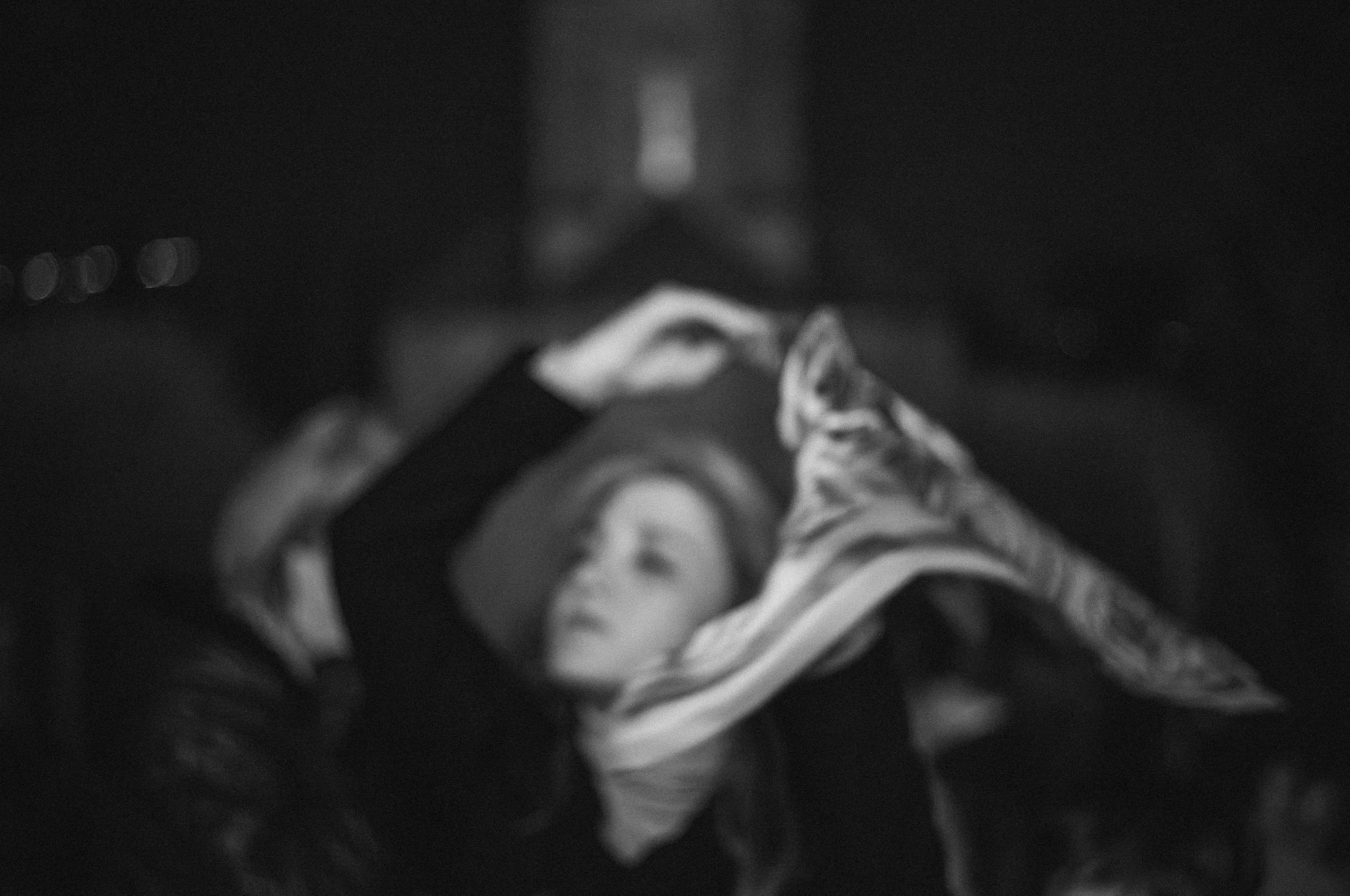
Physicists speak of an observer effect, wherein the act of observation alters what is observed. While mostly negligible at everyday scales, pure objectivity is revealed as impossible as we approach nature’s most delicate features. Photography has its own analog: the mere presence of a camera inevitably alters the moment.
Throughout my career, I’ve wrestled with this conundrum…albeit from the opposite direction—namely, the advertising industry’s relentless pursuit of that ever-elusive buzzword, guaranteed to make an appearance in every creative treatment: authenticity.
Commercial productions expend inordinate resources attempting to create verisimilitudes of the spontaneous, believable moments that occur naturally all around us every day. But, if these moments are so commonplace, why is it so difficult and expensive to reproduce them on demand? Much of the difficulty lies in reconciling client demands with real-world constraints, but some is actually recursive. A bit like rockets, where additional payload requires additional fuel—and that additional fuel requires still more fuel just to carry it—commercial productions often paradoxically require more production resources just to keep things from looking produced.
More specifically, the subtlest details of organic behavior rarely survive intervention intact, like frost under a fingertip. If there’s one lesson I’ve learned over the years, it’s that the quickest way to spoil an actor’s performance is to direct them with too much specificity. In fact, many of my favorite images were captured in unguarded moments between takes, almost by accident.
If our equation here is one of ‘less being more’, then it follows that authenticity occurs in the limit as the photographer’s presence approaches zero.
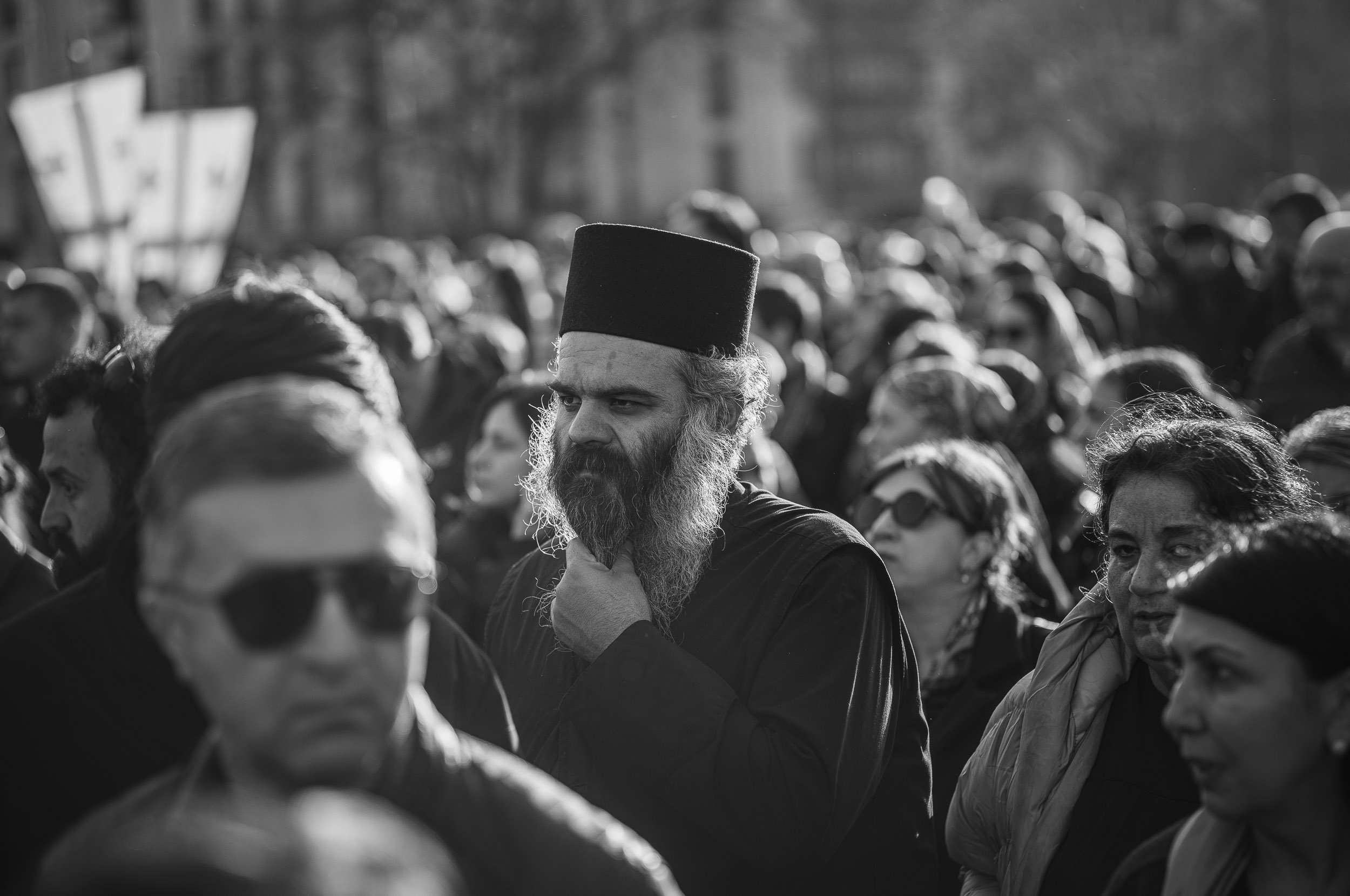
And so, in Georgia, where I sought to capture some of the most delicate human moments imaginable, I wanted nothing more than to disappear.
The subtlest details of organic behavior rarely survive intervention intact, like frost under a fingertip.
VIII
silent sea of grief
on the funeral proceeding for Patriarch Ilia II
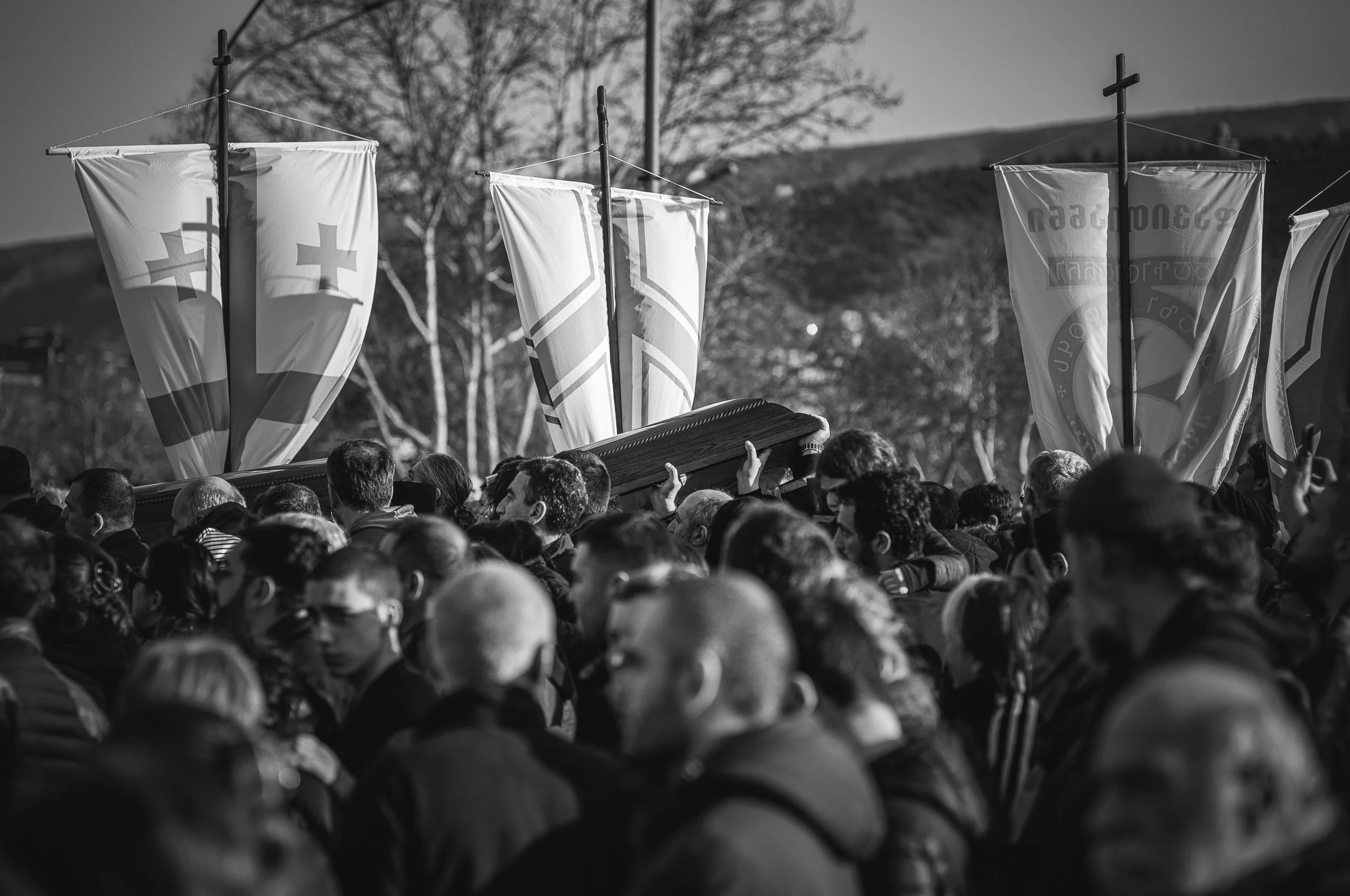
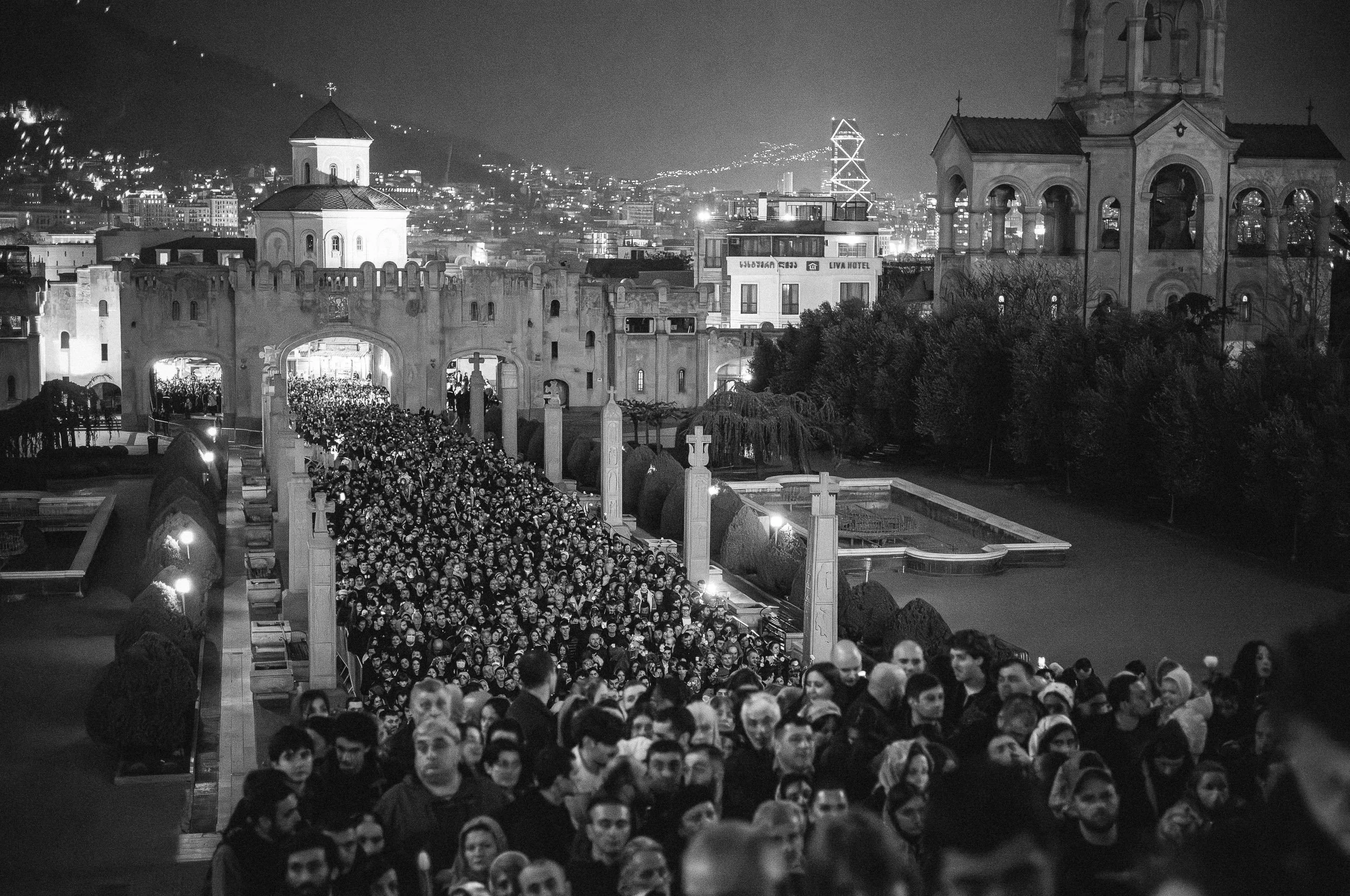
Walking along the Kura River one afternoon, the street above me suddenly swelled with thousands of somber Georgians. Apparently, someone important had died. That evening, I found Old Tbilisi closed to traffic, its ambiance undeniably different. Asking around, I learned they were mourning Catholicos-Patriarch Ilia II, head of the Georgian Orthodox Church.
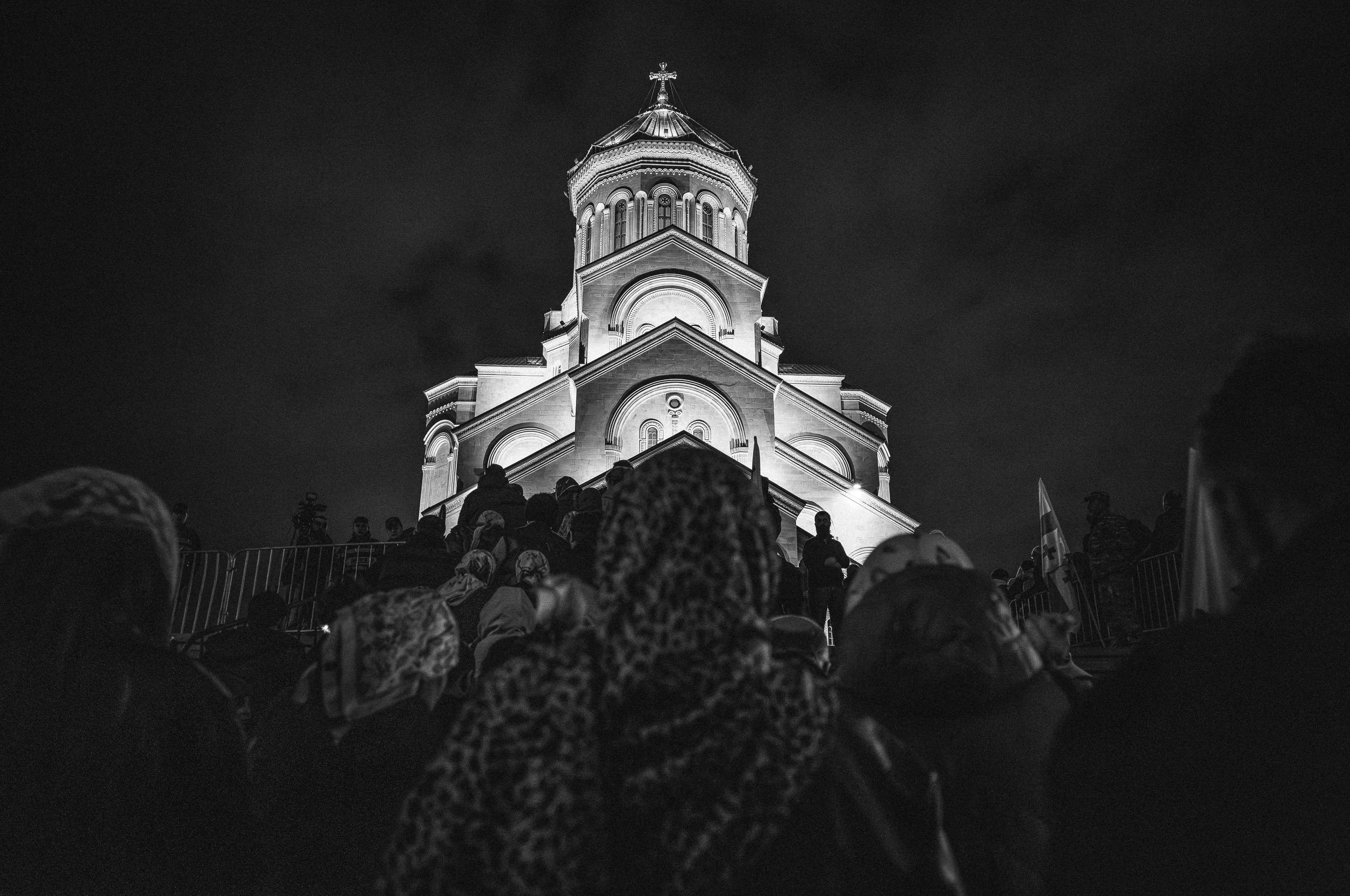
He was to lie in state at the national cathedral as people from across the country poured into the capital to pay their respects. Documenting it was tempting, but not enough to brave the crowds. I waited days for the surge to wane, but it only grew. On the final evening, I took the plunge.
A kilometer from the cathedral, a queue was already coalescing. I hesitated. Lines and crowds are anathema to me. Besides, packed so tightly, what could I possibly see, much less photograph? As I deliberated, the crowd grew around me until I had little choice but to be absorbed into its midst.
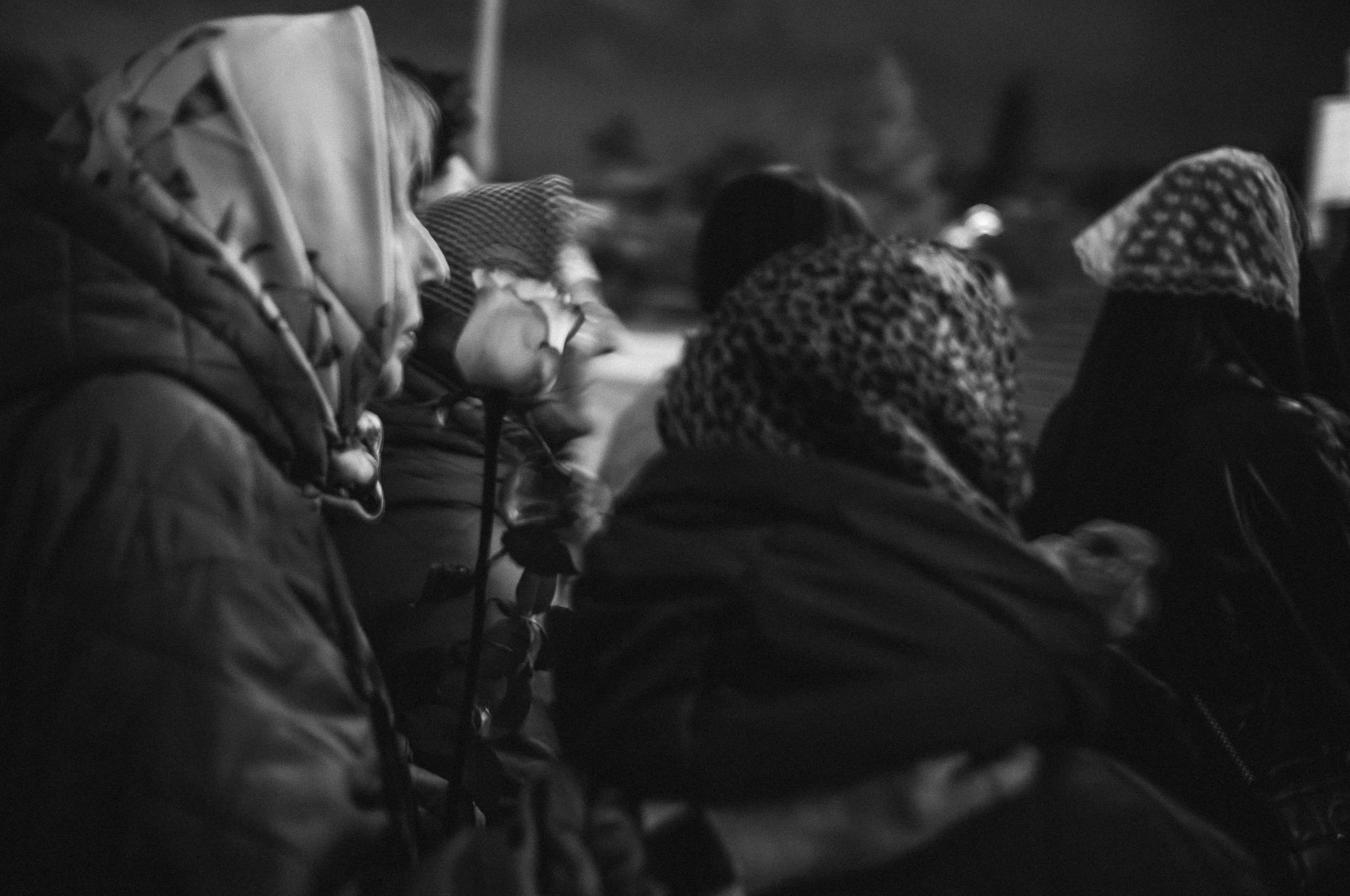
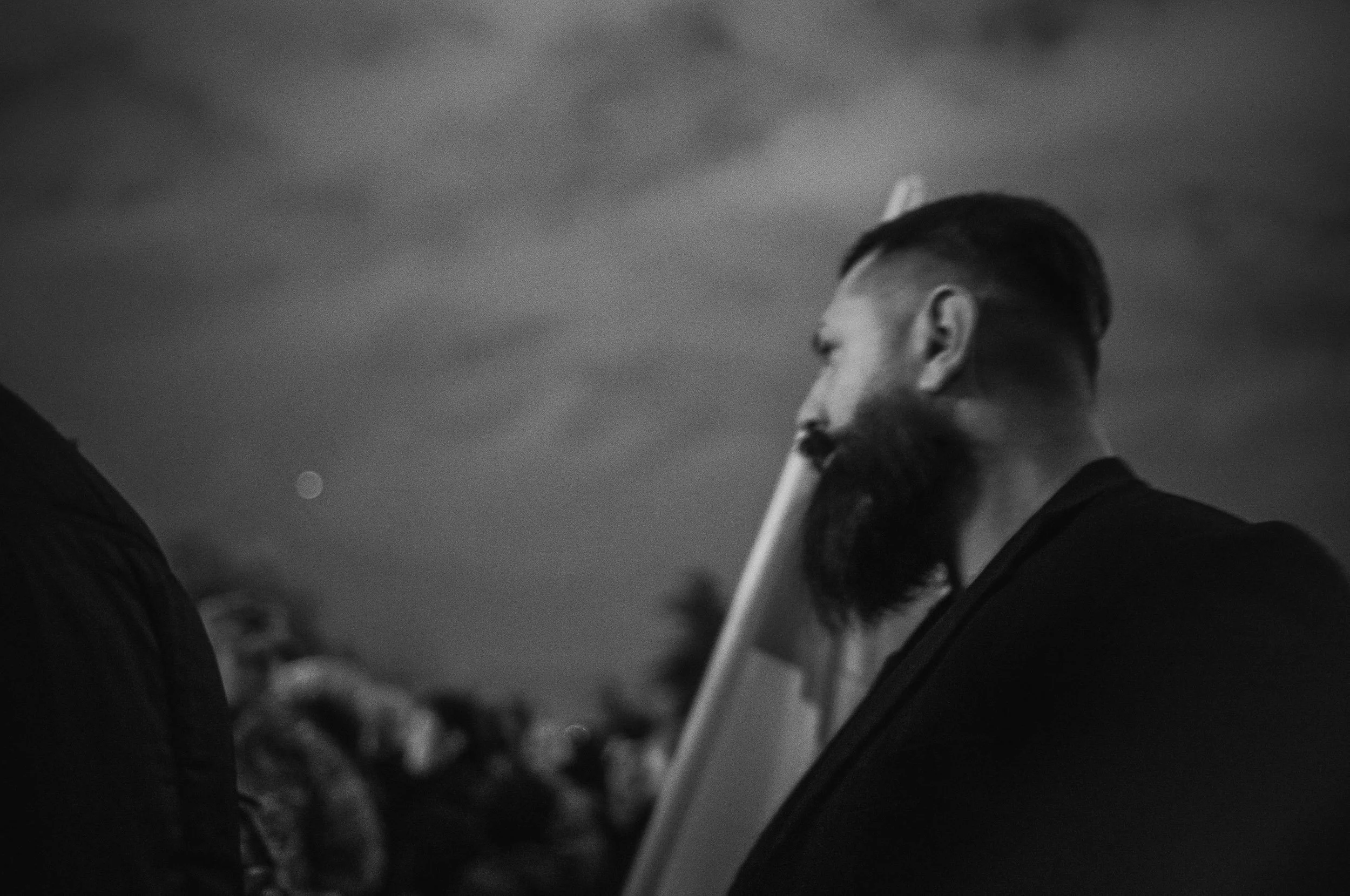
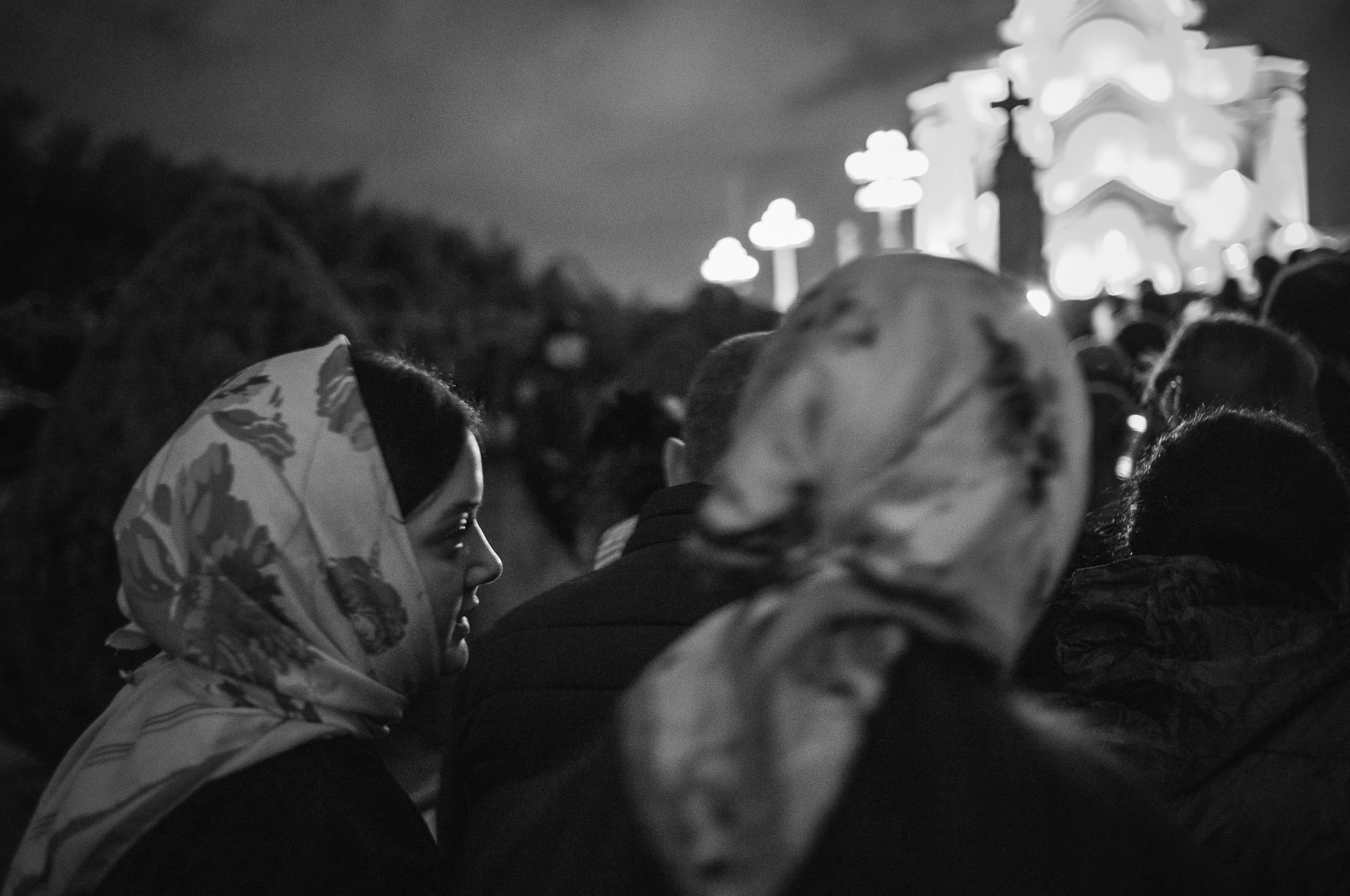
In resignation, I fell to observing. Elderly women stood nearby, each with a rose. Children rode on fathers’ shoulders, flowers in hand, silhouetted against the night sky. A woman in front of me held her phone aloft, not to take photos, but to relay the experience via video call, sans commentary. At the other end, her family watched earnestly in what appeared to be a candlelight vigil. All the while, faint a cappella harmonies floated over the crowd.
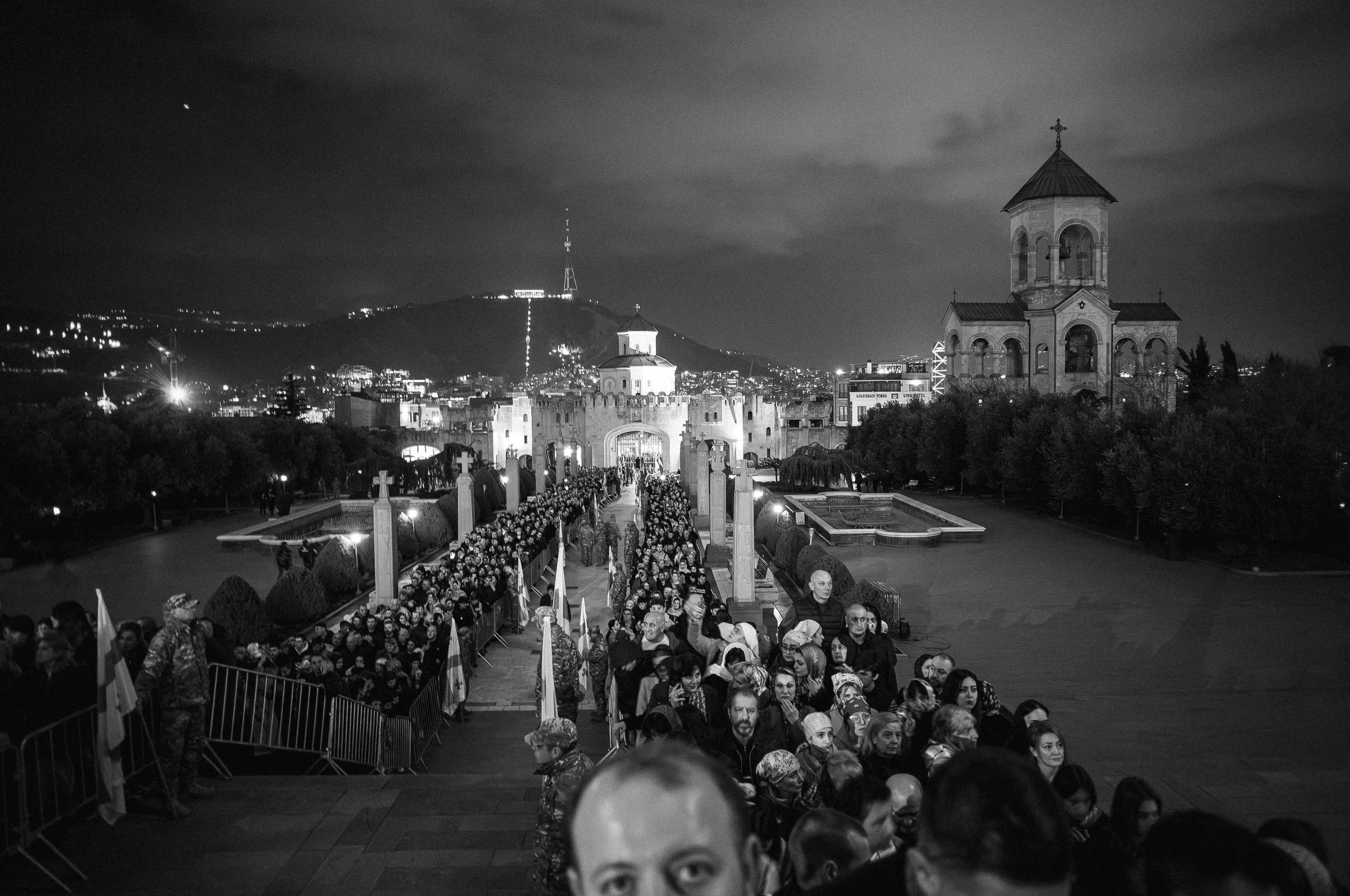
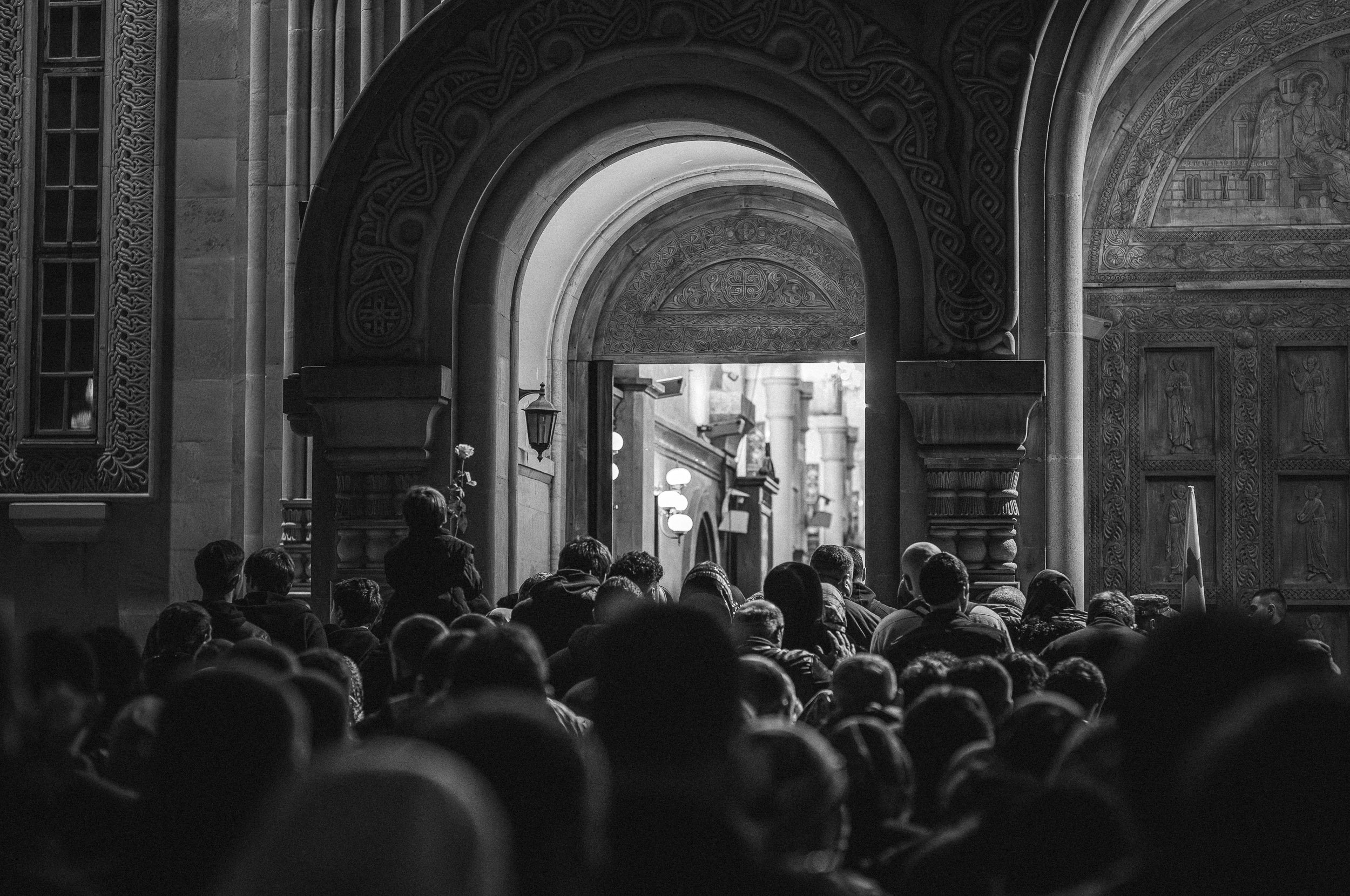
Hours later, after passing through the cathedral, I emerged onto the terrace and, liberated from the throng, finally had room to photograph freely. From the top of the steps, I looked over the massive queue inching its way up like a dark, inverted glacier.
Only then did something apparent all along fully register: despite the sheer volume of people, there was no commotion, no impatience, none of the restless energy of a typical crowd. Aside from the faint, haunting chorale, there was no sound whatsoever. You could hear a pin drop.
A seemingly impossible serenity permeated the scene—a silent sea of grief and devotion.
like a dark, inverted glacier
a silent sea of grief and devotion.
IX
the mysteries of god
accepting the absence of a closed-form solution
After six weeks in Georgia, I still couldn’t explain why my attention kept following a strange, invisible gradient back into its churches. It wasn’t a newfound belief in God; on that question, I left much as I arrived. But I’d begun to suspect that, in rejecting religion, I’d perhaps discarded more than I intended.
My previous religious experience had centered around certainty—claims and doctrine to be accepted and defended. Georgian Orthodoxy confronted me differently. I couldn’t understand the liturgy, read the inscriptions, or decipher the rituals; even the incense curling through ancient naves seemed part of a symbolic language I couldn’t read. Moreover, apart from the priest at Metekhi, no one seemed interested in explaining any of it, much less persuading me.
Unable to understand it intellectually, I instead relied on photography to make what sense I could of the observable field of lived experience. What fascinated me wasn’t so much what Georgian Orthodox Christians believed, per se, as the divergence between the apparent depth of their conviction and the remarkable subtlety—if not total absence—of their outward display, perhaps most evident at the patriarch’s funeral, where the steady flux of tens of thousands into the cathedral somehow resolved into a profound silence.
The trouble was that the qualities that made these moments worth capturing—their intimacy, vulnerability, nay, authenticity!—were also those my camera threatened to disturb, leaving me unsure where observation crossed the boundary into intrusion. These are among the most ethically fraught photographs I’ve ever made, and yet…for reasons I still can’t entirely articulate, I believe they were well worth making.
I keep returning to the priest at Metekhi and his blunt question. My answer then felt insufficient, and six months later I still don’t really have a better one. The difference is I’ve come to see that rejecting religion’s claims no longer seems reason enough to discard the mysteries that remain or deny their value.
I’d begun to suspect that, in rejecting religion, I’d perhaps discarded more than I intended.